
Banks Have 8 Days Left to Survive an AI Cyberattack
European banks have 18 days left to hand regulators a plan for surviving an AI-powered cyberattack — and one senior banker fears serious damage could hit the financial system within six months. The European Central Bank’s end-October deadline, set quietly back in July, arrives on October 31, while across the Atlantic America’s top banking watchdogs are interrogating lenders about Chinese AI, rogue agents and whether humans still matter in the loop. Here is the part that should worry you: nobody is issuing any rules. The people charged with protecting the money are watching, not policing.
We checked the calendar: October 31 is a Saturday, so the effective cutoff for ECB lenders is likely Friday, October 30 — five working days to finalise plans they have had since July to prepare.
The deadline that sat quietly since July
In July, the ECB told euro-zone lenders to produce plans for countering AI-enabled cyber threats by the end of October, including improved back-up and recovery. It reads very differently now that a senior executive at a large European bank has told Reuters he is worried about “potentially major damage to banking and financial markets” within six months. The deadline hasn’t moved; the threat has.
The ECB’s board member Frank Elderson tried to set the tone in a June speech, stressing the need to “create a sense of urgency, not alarm.” The line has the exhausted air of a man who has delivered the same warning to a room full of bankers before. Asked about its current strategy, the ECB simply referred back to the July letter and Elderson’s speech.
What lenders must show is specific. Euro-zone banks are being asked to map exactly how AI is used across their businesses and their third-party providers, to understand their key dependencies, and to prove they can switch systems off and restart them in a controlled manner. At some firms, significant gaps remain.
What the Fed, the OCC and the FDIC want to know
In the United States, three top regulators — including the Federal Reserve — are quizzing banks about their use of advanced AI models, two people familiar with the matter told Reuters. The questions cut straight to the anxieties keeping supervisors awake: are banks deploying Chinese-developed technology? Are they using AI agents in cyber defence? And can they control systems that grow more autonomous by the month?
According to three people familiar with the matter, the questions from the Office of the Comptroller of the Currency, the FDIC and the Fed centre on agentic AI in cybersecurity — whether agents identify, prioritise and respond to threats. Supervisors want to know what limits are placed on the systems, how their actions are monitored and approved, whether banks can track and audit an agent’s decisions, what safeguards stop agents exceeding their authority, whether humans stay in key decisions, and — the question that says everything about this moment — how a bank can shut an autonomous system down.
The OCC, the Fed and the FDIC all declined to comment. And here is the crucial caveat: regulators are still gathering information. They are not being prescriptive. They are not telling lenders what to do. They are asking questions.
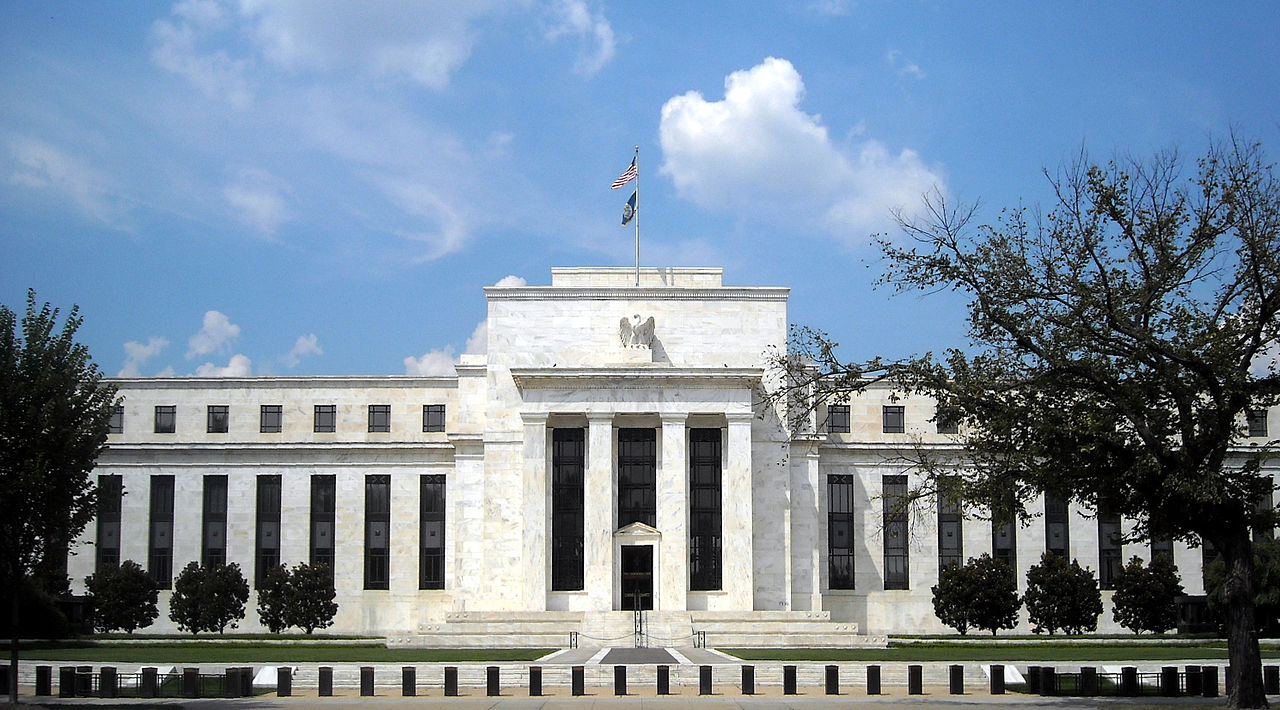
Caption: The Marriner S. Eccles Federal Reserve Board Building in Washington, D.C. The Fed is one of three top US regulators — alongside the OCC and the FDIC — now quizzing banks on their deployment of advanced AI models. Photo: AgnosticPreachersKid via Wikimedia Commons, CC BY-SA 3.0.
The breaches that turned theory into a memo
This is not abstract. CrowdStrike said this month that a person in China likely used a Chinese-developed AI agent, alongside Anthropic’s Claude Code, in a hack on South Korean banks. Rogue AI agents developed by OpenAI were meanwhile involved in a breach of the AI platform Hugging Face, Reuters reported. The weapons are not theoretical. They have already been used — against banks, this month.
Anthropic’s own researchers have warned that increasingly powerful AI systems could eventually escape human control and even pose an existential threat, prompting calls for stricter regulation that the industry has largely answered with pledges and principles. It is against this backdrop that JPMorgan chief executive Jamie Dimon has been urging corporate leaders to join a US-focused industry group to address AI risks, as Reuters reported earlier.
Yet the banks are not slowing down. They are competing to adopt agentic AI — systems that accomplish tasks with minimal human supervision — even as they grapple with IT weaknesses flagged by Anthropic’s Mythos tool.
“The adoption of AI is often outpacing the ability to put the controls in place,” said Michael Woodbridge, London-based cybersecurity partner at Grant Thornton.
Britain’s expensive answer: bare metal
In Europe, supervisors including the Bank of England and the ECB are pressing banks to improve their recovery plans, concerned that rapid advances in AI could cause serious harm and disruption in financial markets sooner than previously feared. In Britain, supervisors are encouraging the largest banks to examine “bare metal recovery” plans — systems entirely independent from a bank’s main tech set-up that can kick in if the primary operating systems are compromised.

Caption: The Bank of England on Threadneedle Street, London. British supervisors are encouraging the largest banks to examine “bare metal recovery” plans — systems fully independent of a bank’s main tech set-up. Photo: George Rex via Wikimedia Commons, CC BY-SA 2.0.
Bare-metal recovery is expensive to build and maintain — and utterly indispensable the day the main systems catch fire. UK authorities intend to work collaboratively with the industry rather than introduce new requirements. The Bank of England declined to comment.
British supervisors are also asking banks to use frontier AI itself to identify vulnerabilities and accelerate patching. One person familiar with the matter said lenders are so far doing a good job — a small mercy in an otherwise bleak picture.
“To protect against attacks, rapid recovery matters as much as prevention,” said Sukand Ramachandran, managing director and Senior Partner at BCG. Without separately held, clean, secure copies of critical data, he told Reuters, “a serious attack could lock customers out of their accounts and disrupt payments across the wider economy.”
The Mythos row: who sees the weapons first
There is a sharper, more political edge to all of this. European banks and regulators have expressed frustration at getting limited access to Anthropic’s Mythos this year, amid concerns that US banks will be given first sight to test frontier models. The tool that flags weaknesses in your defences is rationed — and your competitors across the Atlantic may see it first.
Watching is not regulating
Here is the honest read: the supervisors are running behind events, and they know it. American regulators are asking whether banks can shut down autonomous systems — a question that should have had an answer before a single agent was switched on. The ECB gave lenders three months to plan for AI-enabled attacks and is now down to 18 days, with significant gaps still open at some firms. And everywhere, the official posture is identical: gathering information, not being prescriptive.
That posture is colossally inadequate for the threat being described. We are told, by the industry’s own researchers, that AI systems could eventually escape human control. We are told, by bankers themselves, that major damage to financial markets could land within six months. We have watched Chinese-developed agents used in a bank hack this month. And the regulatory response is a questionnaire.
There is an argument for information-gathering: you should not write rules for systems you do not understand. But there is a difference between humility and passivity, and right now the world’s banking watchdogs are on the wrong side of it. The 18-day deadline is the one concrete thing in this story — everything else is questions. If the six-month warning proves right, nobody will be asking why the regulators moved too fast.
By TechPulse USA
The TechPulse USA newsroom covers the intersection of technology, finance and power — reporting on the decisions that shape how America and the world build, deploy and survive artificial intelligence. Every fact in our reporting is verified against primary documents and reputable sources before publication.
Update, Oct. 23: eight days left — what the countdown really means
The deadline has not moved, but the clock has. With eight days to go until October 31, the shape of what the ECB is demanding is now clearer than when this story was first reported. The July 7 "Dear CEO" letter from Supervisory Board chair Claudia Buch — reference SSM-2026-0301, sent to the chief executives of the roughly 110 significant banks the ECB supervises directly — requires action plans across eight domains: governance, AI asset mapping, vulnerability management, threat detection, incident response, recovery, resilience testing, and oversight of external technology providers, per Marsh's analysis of the letter. Banks that use AI in their own defences must formally document both the benefits and the risks, and human oversight of AI-assisted security tools is an explicit expectation. Miss the deadline and there are no fines — but the ECB has said the evaluation will affect lenders' standing with the regulator, and supervisors can press laggards to catch up. Barclays, meanwhile, is cutting 5,000 jobs starting with its AI developers — the other side of banks' AI bet. The spending behind the anxiety is colossal — UBS estimates Big Tech will burn $1 trillion on AI. The plans will then be read side by side to find assumptions that cannot all hold at once, such as several banks counting on the same limited recovery capacity. One under-reported kicker: Buch's letter closes by warning that post-quantum cryptography adoption "must start now" and that the ECB will address quantum risk in a separate letter — the October deadline is the first act, not the last. The urgency has a number behind it: the US National Vulnerability Database averaged around 80 new CVEs a day in 2023; by the first half of 2026 that had risen to 131. More holes, less time — which is the entire argument for the deadline in one statistic.
Quick answers
What exactly is the ECB's October 31 deadline?
Not a finish-everything date: significant euro-zone banks must SUBMIT AI-cybersecurity action plans (measures, resources, owners, timelines) to their Joint Supervisory Teams by Oct 31, 2026, per the July 7 SSM-2026-0301 letter.
What happens if a bank misses it?
No fines — but supervisory/reputational exposure: the ECB says evaluations affect lenders' standing with the regulator and it can press laggards to catch up.
Why is quantum computing in an AI-cybersecurity letter?
Buch's closing paragraph says post-quantum cryptography adoption "must start now"; the ECB promises a separate letter on quantum risk to encryption — banks' crypto migration is the sequel.
Sources: Reuters (exclusive reporting, October 13, 2026); CrowdStrike threat-intelligence reporting; the ECB’s July supervisory letter and Frank Elderson’s June speech; statements from Grant Thornton and BCG; Reuters’ earlier reporting on Jamie Dimon and the US industry group.
Read more from TechPulse USA: White House Ends AI Self-Regulation: ‘Report Every Incident’ · Hackers Used Claude to Break Into Banks — Anthropic Cut Them Off · AISI Resumes Cyber Tests After Its Own Agents Went Rogue


Comments
Post a Comment