
KKR Warns AI Debt Has Swallowed 6% of America's Bond Market
KKR Warns AI Debt Has Swallowed 6% of America's Bond Market
Update, Oct. 2: The chorus KKR joined is getting louder — and it now includes a central bank. The Bank of England's Financial Policy Committee warned on September 30 of "an increase in the risk that interconnected weaknesses in the financial system will crystallise" as AI-related debt issuance surges. Morgan Stanley estimates around $700 billion of data-centre capital expenditure for 2026–28 will be financed through private credit.
By Daniel Rao, TechPulse USA
The bleakest line in credit markets this week wasn't written by a short seller. It came from KKR — itself one of the biggest lenders bankrolling the AI buildout and, awkwardly, co-owner of one of the data-centre firms doing the borrowing. Christopher Sheldon, KKR's co-head of credit and markets, has warned that AI-linked debt now makes up about 6 per cent of the entire US investment-grade bond market, more than double the share any single sector has commanded in 29 years of data. And his punchline was aimed straight at the complacency trade: "We don't think enough people are talking about the potential volatility if AI growth slows."
Sheldon made the remarks in connection with KKR's third-quarter credit letter, published this week under the gloriously on-the-nose title "Let There be Compute". The warning is not really about whether AI works — KKR's analysts are fairly constructive on the technology itself. It is about how the buildout is being paid for: a colossal, concentrated and increasingly debt-financed spending spree, stacked on top of collateral that loses value faster than almost anything finance has ever lent against.

The arithmetic Wall Street cannot unsee
Start with KKR's numbers, because they are genuinely startling. Outstanding AI-related credit now sits at roughly $600 billion. That represents somewhere between 6 and 6.3 per cent of the US investment-grade market, depending on whose spreadsheet you are reading — either way, more than twice the 2.6 per cent average exposure of the largest single sector over the past 29 years. Sheldon called it "an unusually concentrated investment cycle". Which is credit-market speak for: we have never seen anything like this.
And KKR thinks the pile is still growing. The firm's analysts estimate the debt issued to fund the AI buildout could ultimately total 20 per cent of the investment-grade market — a concentration of risk that would rival what is playing out in equities, where a handful of AI names now drag the S&P 500 around like a tugboat. "If the booming AI sector faces a downturn," the firm cautioned in its report, the resulting volatility could be severe — and the true exposure is probably worse than the headline number, because off-balance-sheet financing arrangements like credit guarantees, leases and future commitments are not fully captured.
We ran KKR's figures against this week's own deal tape. The concentration looks, if anything, understated. Hyperscalers alone have issued roughly $250 billion of debt in 2026 — and next year's number is expected to come in higher still. Capex is running at around $1 trillion this year, possibly $1.2 trillion next; Oxford Economics puts cumulative AI infrastructure investment between 2024 and 2028 near $3.8 trillion. Over at Goldman Sachs, the credit team — tracking the fault lines Reuters Breakingviews flagged on September 8 — counts nearly $500 billion in AI-related debt sold through early August. That is roughly a fifth of all higher-rated US issuance this year. In 2024 it was barely 1 per cent.
"We don't think enough people are talking"
The bluntness of Sheldon's warning matters because of who he is. This is not an academic with a spreadsheet and a Substack. KKR manages hundreds of billions across credit and private equity, and its credit arm has become one of the primary financiers of the AI infrastructure boom. Last month Sheldon was out at a financials conference talking up the opportunity: an estimated $7.6 trillion in hyperscaler capital expenditure over the next five years, and more than $80 billion in private investment-grade transactions originated or placed by KKR year to date — a 104 per cent increase on all of last year. The firm is not anti-AI. It is, however, starting to worry about the terms.
Which brings us to the awkward bit. One of the companies doing the borrowing is CyrusOne — owned by KKR and BlackRock's Global Infrastructure Partners — which secured $10 billion in August. The money for new construction, however, stays locked until permits land and leases are signed. No more blind bets on future demand. The lender sounding the alarm is, in other words, also one of the landlords. When the house itself starts asking for milestones, you should probably pay attention.
That tension is precisely what makes the Q3 letter — co-authored by Sheldon and his fellow co-head of credit and markets, Tal Reback — worth reading rather than skimming. Its core message: the capital mix has to broaden. The $8 trillion of capex the buildout requires cannot be met through traditional public equity and debt markets alone, and investors will need specialised expertise across infrastructure, real estate, credit and equity just to underwrite it. "Credit quality only gets you so far," the letter argues, "and structural protections are key." Translation: the name on the bond matters less than the terms behind it.
Where the cracks are already showing
You do not have to take KKR's word for the tightening. It is visible in the week's deal headlines. CyrusOne's $10 billion is the big one, with its locked construction tranches. Then there is Galaxy Digital: the crypto conglomerate sold $3.507 billion of BB-minus rated senior secured notes in July — priced at a coupon of 9.875 per cent, maturing in 2031 — to expand its Helios campus in West Texas for CoreWeave. That is roughly a 10 per cent yield, three full percentage points above the US high-yield index, despite pledges on the project assets and 15-year leases with CoreWeave underpinning more than $1 billion in annual revenue. When a BB-minus borrower has to pay double digits with a 15-year hyperscaler tenant attached, the market is telling you what it thinks of the risk.
The power problem is worse. Texas — the state where half the buildout seems to be happening — has paused new grid connections, a move that puts roughly 50 gigawatts of proposed projects at risk, about a fifth of the entire US pipeline, according to BloombergNEF figures reported by WebProNews. Supply chains for specialised equipment are stretched thin. Local governments are dragging their feet on approvals, and public pushback over water use, energy draw and noise keeps getting louder. Even the insurance market is balking: construction costs for a single mega-project now regularly land between $10 billion and $30 billion, and traditional insurers are walking away from risks they cannot underwrite — KKR and Blackstone have both reportedly dropped data-centre debt deals because the insurance capacity was not there.
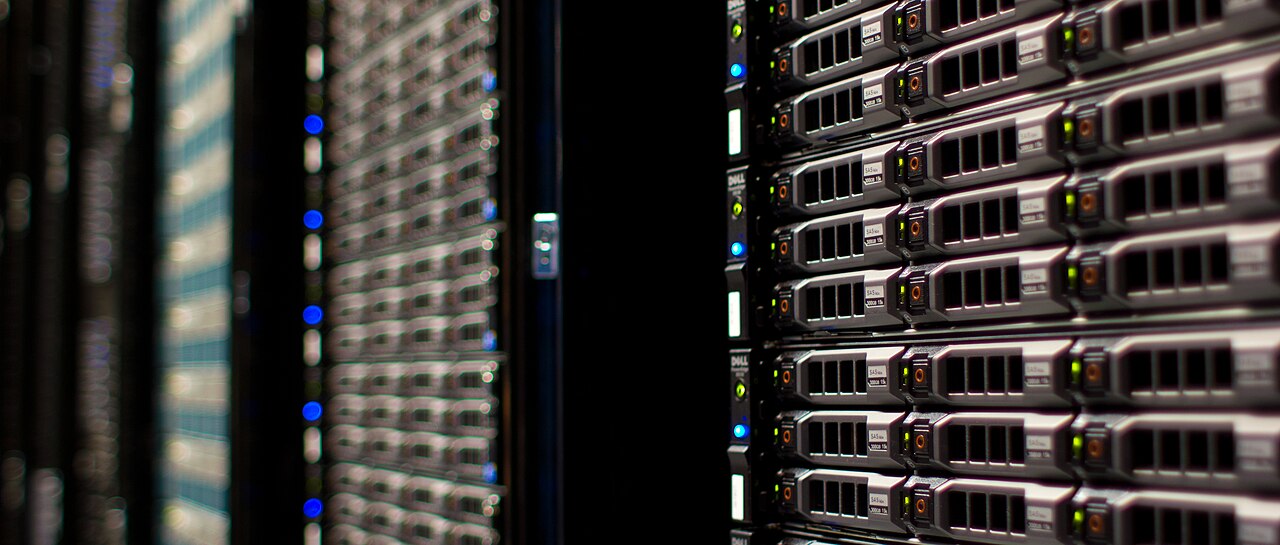
And then there is the small print nobody read. Banks used to view data-centre loans as safe: long-term leases with Big Tech names on them. Those leases are looking less ironclad than they did. Force majeure clauses allow tenants to walk away or defer when external forces intervene — and power shortages count, as do permit fights. The assumption that a signed lease equals a guaranteed cash flow is, in this market, shoddy underwriting. It is exactly the kind of complacency Sheldon is talking about.
Crusoe just killed its own $1.25B Boom turbine deal — the neocloud financing story is getting choppy.
The three ways this thing breaks
KKR's report names three variables that the debt math may not be pricing in. First, AI chips losing value quickly as newer models are released — collateral with a depreciation curve that has never been tested through a downturn. Second, data centres taking years to build, delaying revenues long after the borrowing has started. Third, power grids being unable to keep up with demand, limiting AI usage for years even if everything else goes right.
The report's verdict on what happens if any of these bite is worth quoting in full: "When a mistake occurs in something this capital-intensive, you cannot always cut back to health if the cash burn is too far ahead of the operating reality." Read that again. It is the difference between a software company missing a quarter and a borrower that has already poured concrete. A SaaS business can cut staff and survive. A half-built data centre with a 10 per cent coupon and no power connection cannot cut its way back to health. The money is already gone.
This is the point that the Nvidia financing architecture makes impossible to ignore. In August, Nvidia unveiled memorandums of understanding with Apollo, BlackRock, Blackstone, Brookfield, Goldman Sachs and KKR to assemble more than $500 billion of third-party capital for AI data centres — each project in its own special-purpose vehicle, issuing bonds collateralised by the GPUs and the compute itself, leased back to Nvidia's customers. It is ingenious, and it is also circular: the chip vendor helping to finance purchases of its own chips, against collateral whose resale value depends entirely on demand for those chips holding up. If AI growth merely slows — not collapses, just slows — every link in that chain reprices at once.
The $10.3 trillion backdrop
For the macro context, KKR's warning lands alongside a remarkable piece of economic history. Columbia Business School's Stijn Van Nieuwerburgh — finance and real estate — did the long arithmetic for the Brookings Institution's September 25 economics conference. His number: $10.3 trillion of AI investment between 2025 and 2032. That works out to 3.63 per cent of US GDP, every year.
Van Nieuwerburgh's paper argues the projected buildout runs larger, relative to the economy, than America's canal, railroad, electrification, highway or telecommunications booms. The paper's own numbers back the claim. Railroads at their 1870s–1890s peak absorbed about 2.24 per cent of GDP a year. The interstate highway system ran at 1.13 per cent. Electrification: a mere 0.50 per cent. Set against that history, the AI buildout costs more than three times — in GDP terms — what it took to pave the country, and roughly seven times what it took to wire it. No infrastructure wave in US history has drawn this hard on the economy for this long.
Van Nieuwerburgh's sharper warning is about where the risk is migrating: from transparent, on-balance-sheet financing by major corporations to opaque off-balance-sheet structures — joint ventures, private credit, securitisation, special-purpose vehicles, lease commitments, loan guarantees. These arrangements, he writes, "may make correlated exposures hard to observe before a downturn". That is the same 20-per-cent-of-the-IG-market number KKR is flagging, seen from the other end of the telescope: nobody knows exactly how much of it there is, because so much of it is designed not to show up on balance sheets. Which is precisely how Amazon reportedly wants investors to foot its $8 billion Nvidia chip bill — shifting the cost into an investor-backed vehicle and leasing the chips back.
To be fair to the bulls, Van Nieuwerburgh is careful: "it would be premature to conclude that AI infrastructure already poses systemic risk comparable to earlier credit booms." His prescription is measurement and transparency while the industry's capital structure is still evolving. But the history he documents is not comforting. Of the five earlier American infrastructure booms he compares, every one driven by private capital racing ahead of demand ended in a financial bust. The canals ended in state defaults. The railroads ended in the Panic of 1873. The fiber boom ended in the telecom crash. The only one that did not end badly — the interstate highways — was built by the government, with no investors racing to get there first.
Even the Fed is asking the question
The most telling sign that this has moved from a trade press worry to a policy question came last week, when Kansas City Fed President Jeffrey Schmid asked publicly whether AI is becoming "too big to fail". "Where we have to start to really synthesize what's happening in the AI and the data center build-out is are we moving to a too-big-to-fail AI ecosystem," Schmid said, in comments reported by Reuters. "You worry a little bit about how do we understand what's inside... Is there anything systemic?"
Central bankers do not muse about "too big to fail" for fun. They do it when the contingent liabilities are starting to look sovereign-sized. Add the debt pile to the equity concentration — the likes of Meta, Alphabet and Amazon dragging the S&P 500 — and you get a market where a single theme now underwrites both the stock rally and a growing share of the bond market. Sheldon is right: not enough people are talking about what happens if the theme merely stalls.
Our take
Here is our honest reading, after spending the week with the numbers. KKR's warning is not a bubble call, and treating it as one misses the point. The firm is still lending — $80 billion of private investment-grade deals this year and counting — and it explicitly sees enormous opportunity in the buildout. What Sheldon is saying is narrower and more useful: the financing has become so concentrated, so levered, and so dependent on everything going right at once that a mere slowdown in AI growth would detonate across credit markets in ways nobody has modelled. Not a crash. A slowdown.
And the market's own behaviour is already confirming it. Ten per cent yields on BB-minus paper with 15-year hyperscaler leases attached. Locked tranches at CyrusOne. Texas grid connections on ice. Insurance capacity walking away. These are not the actions of a market that believes its own hype — they are the actions of lenders who have read the documents and started asking for protection. Whether the $600 billion of AI debt gets serviced will decide whether the buildout goes down as the most consequential capital formation of the 21st century or the most expensive lesson in it. Either way, the people who lent the money have just told you which way they are leaning. Believe them.
The financing arms race shows no sign of stopping, by the way. SoftBank just wired the final $10 billion of its OpenAI investment, funded in part by a record $11.1 billion junk-bond sale — 8.625 to 9.75 per cent coupons on the riskiest slice of investment-grade paper. And Broadcom lent Anthropic $42 billion so the lab could lease its own chips back — the kind of circular financing KKR's letter is really about. Every one of these deals adds to the same pile. Every one of them assumes the growth never slows.
KKR AI debt warning: the questions everyone asks
What does "$600 billion, 6% of the US investment-grade market" actually mean?
Outstanding AI-related credit now sits at roughly $600 billion — between 6 and 6.3% of the US investment-grade bond market. That is more than twice the 2.6% average exposure of the largest single sector over the past 29 years. Christopher Sheldon called it "an unusually concentrated investment cycle" — credit-market speak for: we have never seen anything like this.
Who is Christopher Sheldon, and what is "Let There be Compute"?
Sheldon is KKR's co-head of credit and markets. "Let There be Compute" is KKR's Q3 2026 credit investor letter, co-authored by Sheldon and Tal Reback, focused on financing the AI buildout and its impact on global credit and capital markets.
What are the ways this thing breaks?
KKR's report names variables the debt math may not be pricing in. AI chips lose value fast as newer models are released — collateral with a steep depreciation curve. A signed lease is not a guaranteed cash flow, with power shortages and permit fights everywhere. The post's verdict: assuming otherwise is shoddy underwriting, and it is exactly the complacency Sheldon is talking about.
Why does KKR's warning matter when KKR itself bankrolls the buildout?
Because it came from inside the casino. KKR is itself one of the biggest lenders bankrolling the AI buildout and co-owner of one of the data-centre firms doing the borrowing. This warning was not written by a short seller.
Sources: Bloomberg's original coverage of KKR's Q3 credit letter (via reporting in Jeremy McKeown's "The AI Freight Train's Growing Debt Bill", Oct. 1, 2026); CBC News / newsbeep on KKR's warning; The Outpost AI's summary of the credit data; WebProNews on data-centre debt roadblocks; SF Net on KKR's "Let There be Compute" Q3 2026 credit investor letter; Brookings Institution, "Financing the AI Buildout" (Stijn Van Nieuwerburgh, BPEA Fall 2026); Reuters (Breakingviews, Sept. 8, 2026; Fed's Schmid remarks); TradingView / Seeking Alpha on Galaxy Digital's $3.507B notes offering; TechPulse USA reporting.
Daniel Rao is a TechPulse USA contributing writer covering AI, finance and the infrastructure behind the boom.


Comments
Post a Comment