
Musk Picks Intel 14A for TeraFab, Tells TSMC to Stand Down
By Daniel Rao | Oct 18, 2026
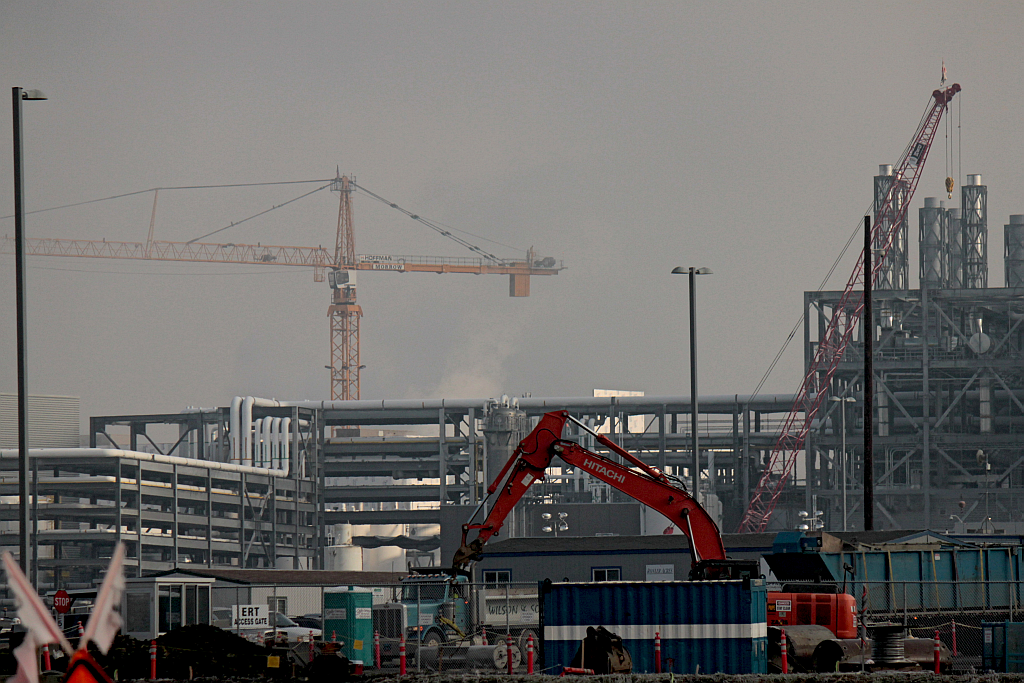
Photo: Intel's D1X development fab in Hillsboro, Oregon — a 14nm-era file photo, not 14A. The Hillsboro R&D campus is now where Intel links arms with Applied Materials. Credit: Intel Free Press, CC BY-SA 2.0.
Elon Musk has just bet a twenty-billion-dollar factory on a chip process that isn't finished yet — and told the finest chipmaker on the planet that it can, at most, rent a corner of the building. Both things happened within about a fortnight, and together they make the biggest week Intel's foundry business has had in a decade.
The first half is the real news. On Tesla's first-quarter earnings call back in April, Musk said, on the record: "We plan to use Intel's 14A process, which is state-of-the-art and in fact not yet totally complete." He added that "by the time TeraFab scales up, 14A will be probably fairly mature or ready for prime time," calling it "the right move" and praising "the CEO, the CTO, and the new team there" at Intel. For a man who has spent years complaining that nobody can make him enough chips, picking an unfinished node from the industry's most mocked manufacturer is either genius or hubris. Possibly both — so we verified every number and quote below against at least two sources before writing a word of it.
The second half is the theatre. Asked earlier this month about talks with TSMC, Musk replied on X: "No, we will build and run the fab. Let there be ZERO doubt about that. Maybe TSMC subleases part of the Terafab if they want, but nothing more than that." TSMC's chairman, C.C. Wei, answered on October 15 with the courteous menace of a man holding 90% of the world's advanced chip output: any TSMC-tied plant in Texas, he said, must be run by TSMC. Neither man is blinking.
The customer Intel's CEO said he needed
In July 2025, after ugly second-quarter results, chief executive Lip-Bu Tan put a knife to the throat of his own most advanced process. Intel would proceed with 14A, he said, only if a "meaningful external customer to drive acceptable returns on our deployed capital" could be found. "I do not subscribe to the belief that if you build it, they will come," he told analysts. "Under my leadership, we will build what customers need, when they need it, and earn their trust through consistent execution."
Translation: 14A was on death row, and one customer could commute the sentence. That customer is Musk — the man building 1 terawatt of annual AI compute in Texas for Optimus robots, Cybercabs and SpaceX's orbital data centres.
Intel formally joined the project on April 7, 2026 — the first named foundry partner — with a post on Musk's own platform, X: "Our ability to design, fabricate, and package ultra-high-performance chips at scale will help accelerate TeraFab's aim to produce 1 TW/year of compute to future advances in AI and robotics." On Intel's Q1 call, Tan said: "We are super excited about working with Elon Musk, and we have very regular meetings. He and I, we share the same vision that the whole global semiconductor supply did not keep pace with the rapid acceleration in demand."
What Musk actually committed to
Near term: a $3 billion research fab at the Gigafactory campus in Austin, producing "a few thousand wafers per month." Musk explained it with unusual candour: "It is really intended to try out ideas… for improving the fundamental technology of how chips are made, some of the new physics we would like to test out. You need kind of like a few thousand wafer starts a month to make sure that a production process is sound."

Photo: Tesla's Gigafactory Texas near Austin, June 2022 — file photo. The new $3 billion Terafab research fab is going up at this campus; this is the original building. Credit: Larry D, CC BY 4.0.
Long term, SpaceX takes the high-volume manufacturing baton. "Tesla's doing the research fab, SpaceX's doing the initial part of the large-scale TeraFab, and then we've got to figure out the rest," Musk said. The main site is the retired Gibbons Creek coal plant in Grimes County, about 90 miles northwest of Houston. The first phase costs $16.8 billion — confirmed by Governor Greg Abbott in August — with the full buildout estimated at up to $119 billion across more than 100 million square feet. Musk has called it the largest and most valuable building on Earth.
TSMC gets shown the door
In early October, analyst Tim Culpan reported TSMC was exploring cooperation — likely owning and operating a new fab, with SpaceX providing equity or volume commitments. Musk's first response, on October 3, was coy: "Just discussions, but something may come of it." TSMC shares climbed toward records.
Wei's October 15 answer was the moat talking: TSMC runs its plants, full stop. The company just posted a 69% jump in quarterly profit on AI demand — the same record-breaking quarter we covered here. TSMC doesn't need Texas. Texas, arguably, needs TSMC.
But Musk doesn't want a supplier relationship — the same instinct behind the Tesla–SpaceX merger talks Barclays is circling. "I don't know how to make chips, to be clear," Musk said cheerfully at a recent event in Austin. Leading-edge fabs take thousands of specialised engineers and years of painful defect-learning. That is precisely what Intel brings — and precisely what TSMC would have brought, minus the ego of a man determined to learn the lesson the hard way.
The numbers behind the turnaround
Is Intel actually turning around, or is a famous customer papering over a broken business? Honestly: both, so far.
The quarterly numbers are Intel's best in years. First-quarter 2026 revenue was $13.6 billion, up 7% year on year, beating expectations hard enough to lift the shares 20%. The data centre business grew 22% to $5.1 billion with $1.5 billion of operating profit. Intel Foundry revenue rose 16% to $5.4 billion, its ASIC segment nearly doubled to just over $1 billion, and external foundry revenue — the bit that measures whether anyone outside Intel will pay for its fabs — reached $174 million.
The losses remain brutal: a $4.28 billion net loss for the quarter, $2.4 billion from the foundry, which lost $10.32 billion across 2025. And yet an October investor round-up noted that 18A node output has beaten Intel's internal targets, and Tan told analysts yields are improving more than seven percent a month — "we are way ahead of our schedule," he said.
Applied Materials, and the trillion-transistor bet
On October 6, Applied Materials deepened its collaboration with Intel on next-generation transistors, interconnects and advanced packaging for AI chips — linking Applied's new $5 billion EPIC research centre in Sunnyvale with Intel's R&D campus in Hillsboro, Oregon.
Tan used the moment to float a number: a path, he said, to "more than one trillion transistors in a single package by 2030," built on Intel's Foveros 3D chip-stacking technology. TSMC is in that same EPIC building — Applied named it a founding partner in May. The two companies fighting over Musk's Texas megafab are now developing their future nodes under one roof.
Why this might actually work — and why it might not
The risks first. Terafab's foundation is a process node Intel admits isn't finished, at a company still short on CPU demand. The 14A design-commitment window is only just opening — expected from late 2026 into the first half of 2027 — and first products aren't expected before mid-2028. Bernstein's Stacy Rasgon said it plainly: "the proof will be in execution… the question is whether Lip-Bu Tan can deliver the process technology on time and at the yields Musk will demand." And Musk, by his own admission, doesn't know how to make chips.
But the logic is colossally compelling: Musk's companies cannot buy their way out of the compute shortage — as Broadcom's Hock Tan has argued, the industry's constraint is shifting from raw chips to everything around them — and custom silicon for robots, robotaxis and orbital data centres doesn't exist on any shelf. Intel is the only American company with the full stack — design, fabrication, and the Foveros packaging the chiplets demand — plus CHIPS Act money and a CEO whose whole strategy is making the foundry real. The Tesla deal answers the one question every other foundry customer asks: if it's good enough for the man building a terawatt in Texas, why isn't it good enough for us?
Our take: the arrogant bet is the right one
Musk choosing Intel's unfinished 14A over TSMC's proven, dominant process is the most arrogant procurement decision in semiconductor history — and it is almost certainly correct. TSMC would never let Musk "refactor" process technology, to use Tan's word; TSMC's entire business is the proprietary moat around exactly that knowledge. Intel, desperate and hungry and American, will let Musk inside the machine room and hand him the tools. The risk is real: yields, timelines, a $10 billion annual foundry loss. But the prize isn't a chip contract — it's the only partnership where customer and foundry want the same thing, and nobody else on Earth was offering that. If 14A works, Intel's foundry business has a future. If it doesn't, Tan was going to cancel it anyway. Musk didn't save 14A so much as give it the one thing it never had: a reason to exist.
Quick answers
What is Intel 14A? Intel's next-generation manufacturing process, roughly 1.4-nanometer class, succeeding the 18A node now ramping. It was nearly cancelled in 2025 for lack of customers; Tesla is its anchor.
When does Terafab produce chips? Design commitments are expected from late 2026 into the first half of 2027, with first products targeted around mid-2028.
Is TSMC out? Not quite. Musk says TSMC could sublease space but never own or operate the fab; TSMC says any of its plants must be run by TSMC. The positions are mutually exclusive — one side has to bend.
Sources: Data Center Dynamics (Tesla's 14A selection; Intel's Q1 2026 results and earnings call); WebProNews (Musk's TSMC statements; Terafab scale and site details); InsiderFinance (Intel's Oct 7 confirmation); EE News Europe (deal status); TokenPost (14A design commitments); Unite.AI, AIStockWire and TechTimes (Applied Materials–Intel EPIC collaboration); TweakTown (foundry losses); Simply Wall St (18A output, October investor round-up). Quotes attributed in-line.
Related on TechPulse USA: TSMC's record $23.6B profit, judged against its own hype · Barclays is circling a Tesla–SpaceX merger for December · Hock Tan: AI's biggest problem isn't chips
Daniel Rao covers semiconductors and the AI infrastructure race for TechPulse USA. He has reported on chip manufacturing from three continents and still can't explain a FinFET at parties.
Update, Oct. 18: Morgan Stanley says the AI race will be won on power, not chips
A new Morgan Stanley equity-research report, "What Does the Power Shortfall Mean for Semis?" — reported October 17 by ANI via the Economic Times — argues the AI race will increasingly be decided by which companies can secure electricity, financing and data-centre infrastructure, not just the latest chips. The bank estimates US data-centre developers face a 32-gigawatt power shortfall through 2028 even after accounting for additional generation — about 34 per cent of projected requirements. "Nvidia confirmed our thesis that there is not enough power to meet demand, and there are more semiconductors being built than there are places to put them," the report says. Morgan Stanley adds that data-centre energization is concentrating among "a handful of large, credit-worthy players," with the best-backed developers securing electricity fastest. For Terafab, the read-across is direct: the main site is a retired coal plant with existing grid interconnection, and in Morgan Stanley's framing that interconnection may matter as much as the 14A process node itself.


Comments
Post a Comment