
Naver signs $9bn Brookfield deal to unlock Nvidia billions
By Daniel Rao
South Korea has spent the past year talking about a sovereign AI factory as if saying the words loudly enough would build it. On 27 October, Naver finally gave the talk a signature. The country's dominant internet company has signed a $9 billion computing-infrastructure contract with Brookfield, turning a July handshake over AI infrastructure into a documented business structure — and, crucially, into the key that may unlock Nvidia's roughly $1 billion equity investment.
That distinction matters, and it is the whole story. This is not $9 billion in cash landing in Naver's bank account. It is not a finished data centre, and it is certainly not proof that anyone will pay to use the thing once it is built. What Naver announced, through a corrected disclosure on its "Future Business and Management Plans", is that the infrastructure for its AI factory will be held in a company tentatively called Asset Co., formed by an investment vehicle of the Brookfield AI Infrastructure Fund. Brookfield finances the kit; Nvidia supplies the chips; Naver runs the service and has to find the customers. If any leg of that tripod wobbles, the rest still falls over.
And yet, for a project that has lived mostly in press releases since the summer, a signed contract is a genuine gear change. July's arrangement was, by Nvidia's own description at the time, a nonbinding term sheet for Brookfield's share. October's is a contract. The difference between a term sheet and a contract is the difference between a wedding invitation and a marriage certificate: only one of them can be enforced when the mood changes.
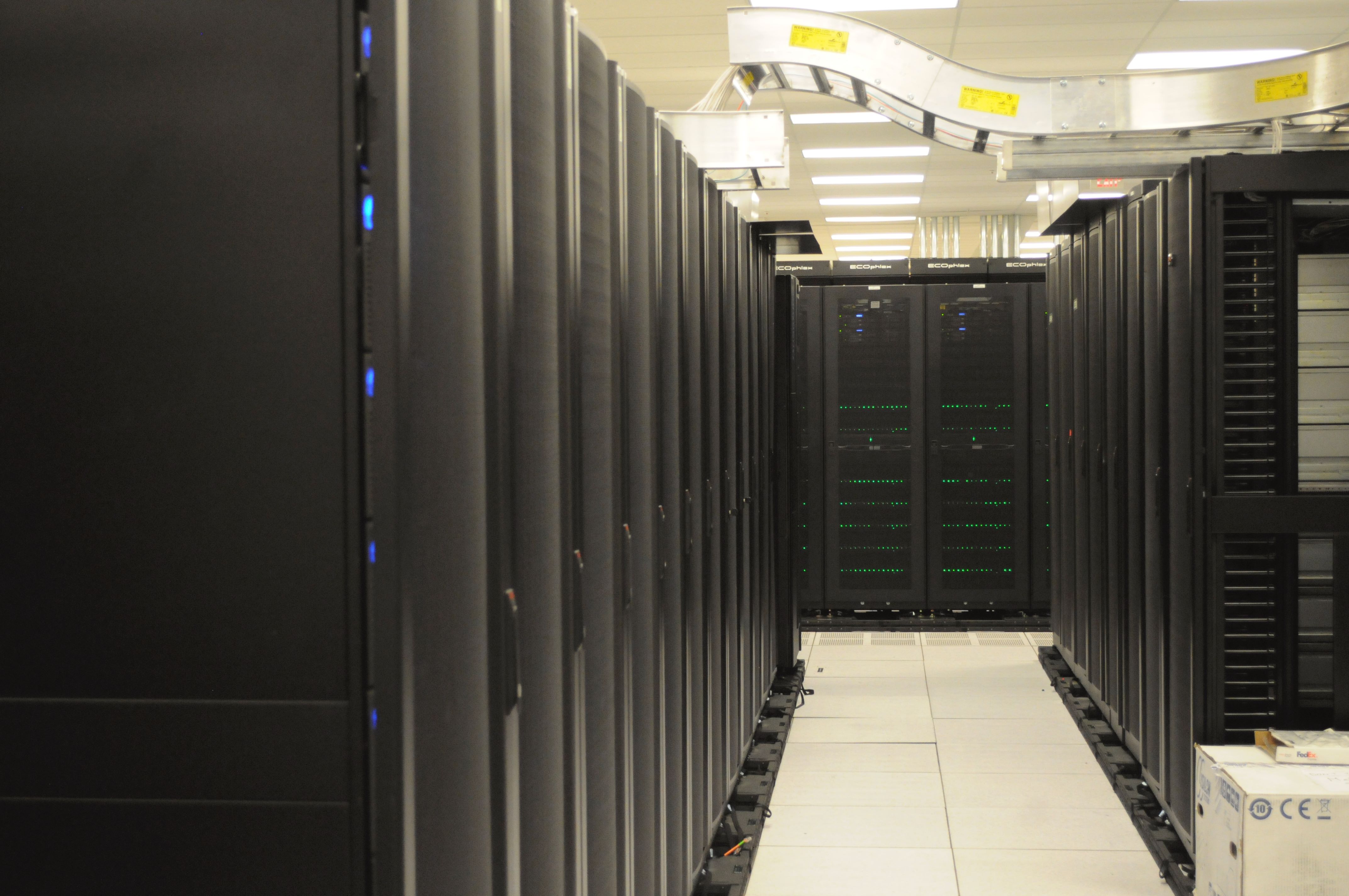
Photo: Server racks in a data centre. File photo — not Naver's GAK Sejong facility. Photo: Derrick Coetzee, CC0, via Wikimedia Commons.
What was actually signed — and what was not
Let us be precise, because the headline numbers invite sloppiness. Edaily reported on 27 October that Naver "has signed a $9 billion artificial intelligence (AI) factory computing infrastructure contract" with Brookfield and "finalized the specific business structure". The $9 billion of computing-service infrastructure will be established through Asset Co., the asset-holding company to be formed by a Brookfield AI Infrastructure Fund investment vehicle.
That is the October news. It is not the same as the July $10 billion project total, and the two figures should never be added together or swapped. In July, Naver, Brookfield and Nvidia announced a $10 billion project in which Brookfield would fund up to $9 billion as exclusive capital partner, Nvidia would invest $1 billion, and Naver would fund the remainder. The October contract is the Brookfield leg of that structure taking contractual form. It does not, on the evidence published so far, mean Brookfield has handed over $9 billion, nor that the full $10 billion is now committed cash.
DigitalToday, reporting the same day, laid out the mechanics that make the structure work — and why it was designed this way. Brookfield plans to raise up to $9 billion through a special purpose vehicle after signing the main contract and to secure infrastructure assets such as GPUs and data-centre facilities. Naver will set up a separate, wholly owned operating company to sell AI computing services to outside firms and institutions. That operating company will receive computing resources from the vehicle and pay usage fees, while selling services onward to customers. The vehicle, in turn, earns its return by supplying the infrastructure.
The logic is plain enough: Naver avoids having to buy every GPU and every square metre of data-centre floor itself, up front, on its own balance sheet. That is a colossally expensive way to enter a capital-hungry business, and it is precisely the burden the Brookfield structure is meant to lift. But the design also means Naver does not own the kit in the straightforward sense. It rents the muscle and has to sell the output at a margin. The structure is clever. Whether it is profitable is a separate question that no contract can answer in advance.
Why Nvidia's money was waiting on this signature
The timing is not a coincidence. Nvidia's planned investment has always carried a condition, stated in black and white in July: it was subject to customary closing conditions and to Naver finalising at least $9 billion of committed financing for the project, separate from Nvidia's own money. DigitalToday put it bluntly on 27 October: to receive the funds, Naver "must meet a prerequisite including securing computing infrastructure worth at least $9 billion". The Brookfield contract is, on its face, the document that satisfies that prerequisite.
The Nvidia money itself is substantial and unusually structured for a company of Naver's age and standing. A paid-in capital increase filing Naver submitted in July shows Nvidia plans to invest $1 billion in Naver, about 1.48 trillion won at the exchange rate at the time of the filing, at 204,500 won per share, with a scheduled payment date of 30 October. DigitalToday notes the final share count and won amount will be confirmed by applying the exchange rate on the reference date set in the contract, and that the schedule may be extended depending on whether the prerequisites are met. In other words, 30 October is the diary date, not a guarantee — though the 27 October contract plainly improves the odds that the date holds.
For context, this is Naver's first third-party share allocation in 22 years, according to DigitalToday's July reporting, and it would make Nvidia a roughly 4.5% shareholder. That is not a passive portfolio stake. It is a chipmaker buying into its customer's future demand, and a search-and-commerce company letting its most important supplier onto its shareholder register. Both sides have skin in the game now, which is exactly why the contract matters more than another memorandum would have.
Back in July, Naver's founder and chairman was already framing the partnership as a move from planning to doing. "NVIDIA's strategic investment and our infrastructure supply agreement with Brookfield have propelled NAVER's vision for the AI Factory business into a robust execution phase," Haejin Lee, founder and chairman of NAVER, said at the time. "Leveraging the solid partnerships with our global partners, we will drive technological innovation, foster a sovereign AI ecosystem, and spearhead efforts to strengthen South Korea's AI competitiveness." Read today, that July quote reads less like celebration and more like a promise that October had to keep. The signature is the first instalment.
The Sejong timetable: 55 megawatts first, gigawatts later
All of this lands, physically, in one place first: Naver's GAK Sejong hyperscale data centre in Sejong, South Korea. The July expansion plan grows the initial Nvidia DSX AI factory deployment there from 55 megawatts to 200 megawatts, built on Nvidia's Vera Rubin and Blackwell platforms, with a longer-term path to gigawatt-scale infrastructure. DigitalToday's 27 October report gives the staging: operations at 55 megawatts in the first half of 2027, expanding to 100 megawatts by the end of that year and 200 megawatts in 2028.
That staging is worth pausing on, because it punctures any notion that a $9 billion contract equals a $9 billion facility tomorrow. Fifty-five megawatts is a serious data centre — it is the first phase, not the destination. The gigawatt ambition, which would be roughly four times the capacity of GAK Sejong as it stands, remains a direction of travel, not a building with a roof on it. Anyone writing "Naver builds gigawatt AI factory" on the back of this week's news would be getting several years ahead of the concrete.
The revenue timetable is similarly staged, and similarly honest about its own uncertainty. Naver said in its 2 August second-quarter earnings release that it expects AI factory-related revenue to arise from the first half of 2027, DigitalToday reported, and some brokerages forecast AI factory-related revenue in 2027 at about 1 trillion won. But there is disagreement even on that: some expect revenue from the second quarter of 2027, others see it reflected in earnest only from the third quarter, once buildout and service launch schedules are factored in. Ahn Jae-min, an analyst at NH Investment & Securities, forecast that contracts with major tenant customers could be disclosed by the end of the year at the latest, and projected that once the 55 MW data centre is completed in the first half of 2027, "results could be reflected from the third quarter."
We checked the July terms against both 27 October reports, line by line, before writing this article — the $9 billion condition, the share price, the payment date and the megawatt staging all line up across the filings and the two Korean reports. Where the sources disagree, notably on exactly which quarter 2027 revenue lands in, we have said so rather than picking the tidier version.
The September meeting that foreshadowed the signature
The contract did not come out of nowhere. On 3 September, Brookfield chair Bruce Flatt and Brookfield Korea CEO Park Jun-woo visited Naver 1784 in Seongnam, Gyeonggi Province, for follow-up discussions on the global AI factory project with Naver chair Lee Hae-jin and CEO Choi Soo-yeon, Edaily reported. The photograph that accompanied Edaily's report tells its own small story: Flatt, second from left, in a room full of people who had already decided this was worth doing in person, not over another video call.
That detail matters more than it looks. Sovereign AI projects are, by nature, political as well as commercial: they involve a country's data, its industrial policy and its relationship with American chip suppliers and Canadian capital. The July announcement was made during South Korean President Jae Myung Lee's AI Summit visit to San Francisco. The September meeting brought the conversation back to Naver's own headquarters. The October signature closes the loop that those two moments opened. None of that guarantees success, but it does suggest this was negotiated, not merely announced.
There is also a competitive clock ticking that has nothing to do with ceremony. Europe is racing to build its own sovereign capacity, as we reported when Europe got DeepMind, Nvidia and Mistral in the same room, and regulators there are already wrestling with how data-centre rules should work — a tension visible in Spain's retreat on data-centre rules. Korea is not building in a vacuum. It is building in a race, and the prize is not just domestic compute: Naver's July plan explicitly targets Korea- and US-based innovators, plus global AI cloud customers, with production-scale compute for models, agents and AI-powered services.
Analysis: this finances the gap — it does not close it
Here is our position, stated plainly: the Brookfield contract is a real achievement, and it would be shoddy journalism to dismiss it as just another memorandum with better stationery. A signed infrastructure contract that satisfies Nvidia's financing condition, backed by one of the world's largest alternative asset managers, is the hardest part of the financing puzzle falling into place. Korea's sovereign-AI bet now has a funding structure, a chip supplier with equity at stake, and a dated timetable for first capacity. Three months ago it had a term sheet.
But financing a gap is not the same as closing it, and anyone who confuses the two will be disappointed on a predictable schedule. The next hurdle, as DigitalToday put it, is customer contracts — and that hurdle is botched just as easily as it is cleared. An AI factory with no tenants is a very expensive warehouse full of depreciating GPUs. Naver's plan to avoid dependence on a single large customer, negotiating instead across multiple customers for different periods and volumes, is sensible risk management. Kim Dong-woo, an analyst at Kyobo Securities, said he assesses that Naver is "in the process of negotiating with multiple customers to secure a more advantageous contract mix than a long-term contract with a single customer", and judged that while the customer-contract announcement is later than market expectations, "the business schedule itself has not been delayed". That is a generous reading, and it may prove right. It is also, notably, an analyst's judgment, not a signed customer.
The profitability warning signs are already in the numbers. Naver's second-quarter revenue rose 16.2% year on year to 3.39 trillion won, DigitalToday reported, but operating profit fell 0.2% to 520.3 billion won, and the securities industry expects operating profit to decline year on year in the third quarter as well, partly on AI infrastructure cost burdens. Naver itself expects profitability may be low in the early stage of the AI factory business, rising to a double-digit operating margin as it matures and, over the long term, more than 20%. Those are targets, not results, and the early years will test how much patience shareholders have for a business that currently produces, in revenue terms, nothing at all from this line.
There is a parallel worth noting for readers watching the wider AI-infrastructure boom. The pattern — a national champion, a US chip giant, a global infrastructure fund, a gigawatt headline — is becoming a template, from the Gulf to Europe to Asia. The template works on paper because each party brings what the others lack: Naver brings operations and local demand, Nvidia brings the silicon and the ecosystem, Brookfield brings the balance sheet. What the template cannot supply is the one thing that ultimately pays for all of it: enough customers, at high enough utilisation, at prices that cover the cost of capital. Korea has now financed its factory. It has not yet sold it.
The same discipline applies closer to home for anyone following how AI systems are actually governed once they are built. South Korea's neighbour in this debate is not geography but policy: as SK Telecom's move to give AI agents IDs — and bosses showed, Korean companies are already wrestling with how autonomous systems should be identified and supervised. Compute without governance is just heat. Naver's factory will need both.
What to watch next
Three dates and one disclosure will tell us whether October's signature turns into a business. First, 30 October: does Nvidia's roughly $1 billion payment land on schedule, or is it extended while closing conditions are tidied up? Second, the end of the year: do major tenant-customer contracts actually get disclosed, as NH Investment & Securities expects, or does the customer announcement slip again? Third, the first half of 2027: does the 55 MW Sejong capacity actually begin operating, and does revenue follow in the second or third quarter?
And the disclosure to watch is the full Brookfield contract structure itself. Edaily's report confirms a contract and a vehicle, Asset Co., but the detailed cost-sharing, the accounting treatment and the exact fee the operating company will pay the vehicle may vary with final terms, DigitalToday cautioned. Those details decide whether this is a good deal for Naver shareholders or merely a large one. Size impresses; terms enrich.
Until those answers arrive, the fairest summary is also the simplest. Korea's sovereign-AI factory has moved from promise to paperwork, and paperwork — signed, structured, conditional on nothing except execution — is progress. It is not victory. The factory still has to be built, filled, and paid for, in that order, and the hardest of those three jobs has barely started.
Sources: Edaily (27 October 2026); DigitalToday (27 October 2026); NAVER/Brookfield/NVIDIA joint announcement via PRNewswire/AAP (25 July 2026); Reuters July 2026 reporting for corroboration of the share terms. All quotes are attributed in the text; July quotations are dated as July 2026.
Daniel Rao covers global AI infrastructure and the business of compute for TechPulse USA. He has followed Korea's sovereign-AI push since the June 2026 Naver–Nvidia agreement.


Comments
Post a Comment