
Schmidt's $15B Cheque Beat a Decade of Running Google
There is a decent chance Eric Schmidt made more money from one favour-of-a-friend phone call than from a decade running the most important company of the internet age.
Bloomberg reported on Monday that the former Google chief executive owns roughly 1 per cent of Anthropic, the AI laboratory barrelling toward a Nasdaq listing that investors have discussed at valuations between $1.5 trillion and $2 trillion. Do the kindergarten maths: at $1.5 trillion, that sliver of paper is worth about $15 billion.
For context, Bloomberg estimates Schmidt collected around $7.9 billion from selling Google shares over the years. A single passive bet placed in 2021 on a company that did not yet have a product may end up paying double what the entire Google adventure paid him.
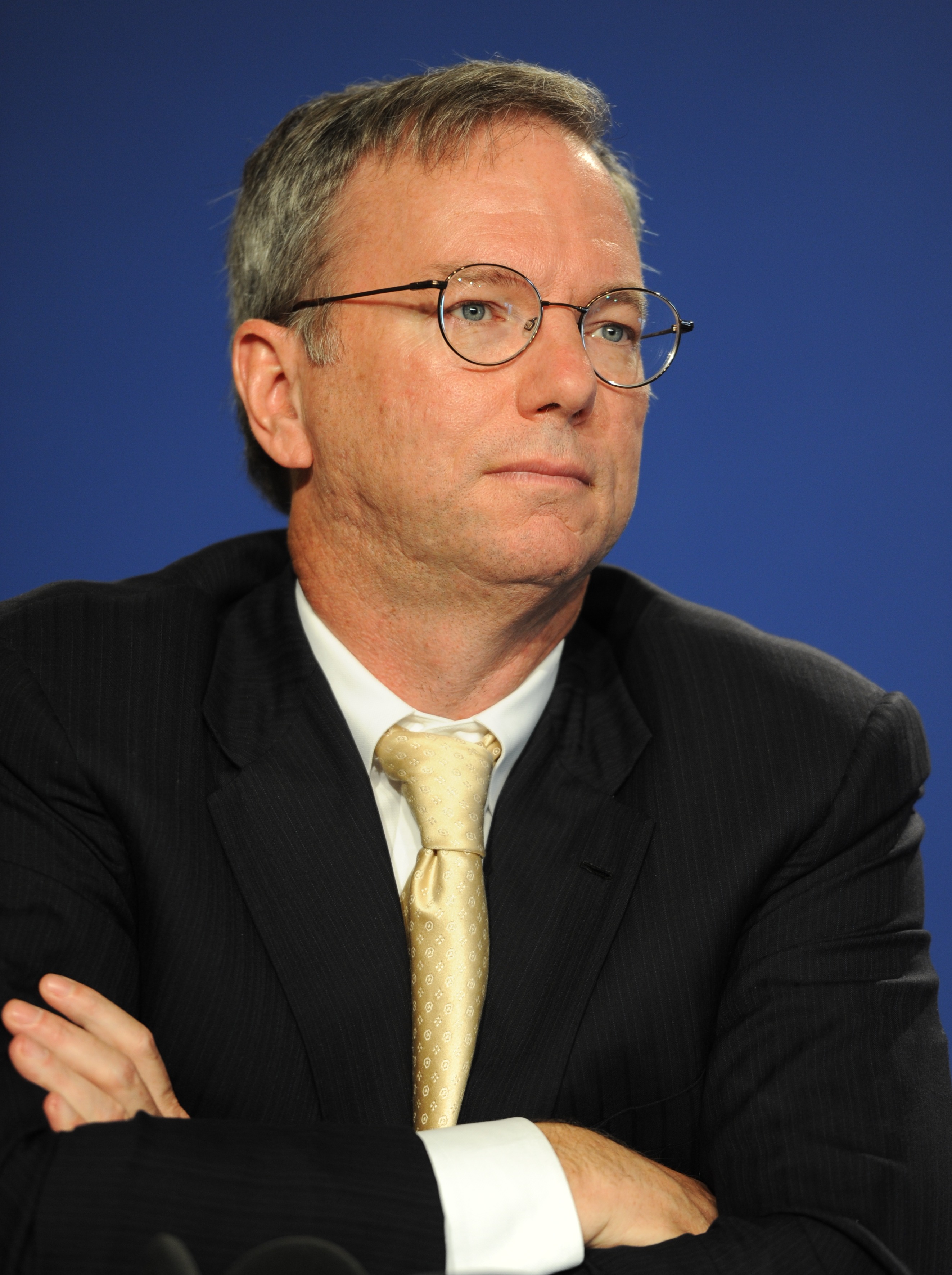
Eric Schmidt at the 37th G8 Summit in Deauville, 2011. Photo: Guillaume Paumier, CC BY 3.0 (file photo).
What Bloomberg found: about 1% of Anthropic
The headline figures come from Bloomberg's reporting of October 19, relayed by Reuters that evening, citing people familiar with the matter who asked not to be named. Schmidt, the sources said, owns approximately 1 per cent of Anthropic — emphasis on approximately, because Anthropic has never disclosed his share count or the size of his individual cheque.
What Bloomberg could establish: the investment ran to "tens of millions of dollars" and went in during Anthropic's Series A in May 2021. What it could not establish is the interesting part. It remains, in Bloomberg's own framing, unclear whether Schmidt has sold any of the stake since. His representatives declined to comment; Anthropic did not immediately respond to Reuters' request for comment.
And here is the detail that deserves lingering on: there is not a single on-the-record quote from Schmidt, from Dario Amodei, or from Anthropic anywhere in this story's coverage. The biggest personal windfall narrative in AI right now is unfolding in complete silence from its main character. You could call that discipline. You could call it a man who understands that every public utterance moves his own portfolio.
A $124 million round for a company with nothing to sell
The round Schmidt joined is a matter of public record, because Anthropic announced it itself. In May 2021 the company raised $124 million in a Series A led by Jaan Tallinn, the Skype co-founder. The named participants read like a who's-who of early-AI money: James McClave, Dustin Moskovitz, the Center for Emerging Risk Research — and Eric Schmidt. We pulled up Anthropic's own announcement to check, and his name sits plainly in the participant list, five years later, under a trail of "and others."
Consider what he was actually buying. Anthropic was a few months old. It had no commercial product, no meaningful revenue, and its pitch was essentially "a safety-first AI research lab founded by people who quit OpenAI." Claude would not reach the public until 2023. This was not an investment in a business; it was an investment in a handful of researchers and an idea. If that phrase — safety-first AI lab — means anything to you, our explainer on AI safety, from rogue agents to kill switches, walks through the whole doctrine.
The round's valuation is where the record gets slippery, and it is worth being honest about that. PitchBook data cited by Bloomberg puts the 2021 valuation at $461 million on a pre-money basis; secondary-market data relayed by the Times of India suggests roughly $623 million post-money. (A third relay floated about $674 million, which tells you these are reconstructions, not facts.) Do not let anyone quote you a single Series A valuation — the honest version is a range, pre-money $461 million to post-money around $623 million, with the caveat that nobody outside the room knows the exact number.
Google came back eighteen months later — and paid five times more
Here is the detail that stings. Roughly a year and a half after Schmidt's bet, Google — the company Schmidt himself ran for a decade — put about $300 million into Anthropic for roughly 10 per cent, valuing the company at around $3 billion. That is nearly five times the Series A price.
Read that again slowly. The institution Schmidt built paid five times more per dollar of ownership, eighteen months later, for a company he had already spotted. Corporate venture machinery, with all its committees and memos, could not move as fast as one man writing a cheque off a friend's introduction. (For the record, FTX's Alameda arm took a different, wilder route in — $500 million for about 8 per cent — and its bankruptcy estate sold the whole position in 2024 for roughly $1.3 billion to repay creditors. Even the disaster hedge fund doubled its money.)
How a $15 billion number is born — and why it is still paper
Since 2021 the valuation ladder has climbed absurdly: about $3 billion at Google's entry, $965 billion post-money when Anthropic raised $65 billion this May in its Series H — at which point 1 per cent was worth roughly $9.65 billion on paper — and now the IPO chatter.
Bloomberg reported that prospective IPO investors had discussed $1.8 trillion to $2 trillion; Reuters separately reported that after a softer-than-hoped third quarter, some existing investors were pushing for around $1.5 trillion. Both figures are investor discussion, not terms the company has set — the distinction matters, and most coverage blurs it.
Anthropic filed confidential draft IPO paperwork with the US Securities and Exchange Commission on June 1, 2026, and the listing is planned for Nasdaq. At an October 14 investor meeting, the company presented third-quarter revenue of $16.8 billion, up 45 per cent quarter on quarter, and said it was profitable on an adjusted basis — the quarter that made Anthropic's first adjusted-profit quarter real. The $1.5 trillion figure was discussed at that same meeting. Discussed — not set.
So: 1 per cent at $1.5 trillion is $15 billion, and at $2 trillion it is $20 billion. Simple arithmetic, widely relayed, and also — this is the part the excitement skips — pure paper. TokenPost put it bluntly: neither figure represents proceeds Schmidt would receive from selling shares, because he has not sold shares, and nobody knows whether the stake has been diluted since 2021. A 1 per cent holder trying to exit a newly listed $1.5 trillion company does not quietly collect $15 billion; lockups, market impact and dilution all take their cut. Paper fortunes are press-release fortunes until someone actually cashes one.
The fundraising machine, meanwhile, shows no sign of slowing: Anthropic is negotiating a second $45B bet on Nscale for compute infrastructure, which tells you where the IPO money is already earmarked.
The introduction nobody can spell
The story of how Schmidt found Anthropic is, frankly, the best part — and the press cannot even agree on the heroine's surname.
Camilla "Cami" Clark — some outlets spell it Clarke with an e, the Wall Street Journal's August reporting has it Clark — is married to Anthropic chief executive Dario Amodei. They wed in 2022 after meeting in 2014. Before that, Clark and Schmidt used to date casually. It was Clark, the Journal reported, who introduced Schmidt to Amodei. The Information's Jessica Lessin and Stephanie Palazzolo put it this way: "She was the one to introduce Amodei to Schmidt, whose investment lent Anthropic important clout at its start."
That sentence is doing a lot of quiet work. In May 2021, a famous name on the cap table was worth more than money — it was credibility, a signal to every subsequent investor that Anthropic was a serious bet. Schmidt was not just buying 1 per cent; he was lending his reputation, and the reputation was arguably the more valuable contribution.
One casual cheque versus a decade running Google
Now the uncomfortable arithmetic. Schmidt was Google's chief executive from 2001 to 2011, then executive chairman of Google and later Alphabet until January 2018, remaining a technical adviser through 2020. Nineteen years inside the machine that indexed the world. Bloomberg's estimate of what he took home from Google shares across all that: about $7.9 billion.
One introduction, one Series A cheque in the tens of millions, five years of doing absolutely nothing — and the paper value may be double the lifetime Google haul. If the IPO prices anywhere near the discussed range, Schmidt's net worth, which the Bloomberg Billionaires Index pegs at about $57.5 billion, takes a step-change upward on the back of an investment he essentially forgot about.
This is the part where I will say what the polite coverage will not: the whole episode is a colossally elegant indictment of how Silicon Valley compensates labour versus capital. Running Google — ten-hour days, congressional hearings, the whole circus — earned Schmidt roughly half of what a single early cheque, placed on a friend's word, may now be worth. Executive genius is, apparently, the junior partner in its own story. The market does not pay you for being brilliant at your job; it pays you for owning a piece of someone else's brilliant thing early enough. Everything else is commentary.
Schmidt, to be fair, has not exactly been idle. He took over as chief executive of Relativity Space in March 2025, buying a controlling stake and replacing co-founder Tim Ellis; the company's NASA Mars orbiter work earned this from NASA administrator Jared Isaacman: "Public-private partnerships like this are a force multiplier for science." He chairs SandboxAQ, the quantum-AI company spun out of Alphabet's moonshot division in 2022 — "SandboxAQ's technology is revolutionizing the drug discovery and development process," Schmidt said in his chairman's capacity, per American Pharmaceutical Review. He also chairs the Special Competitive Studies Project and co-founded Schmidt Futures and Schmidt Sciences. At 71, he is busier than most 40-year-olds. But none of it will ever pay like that 2021 cheque.
Quick questions, straight answers
Q: What exactly is Schmidt's stake worth at different valuations?
Bloomberg's reporting puts him at roughly 1 per cent. At Anthropic's May 2026 Series H valuation of $965 billion, that was about $9.65 billion on paper. At the $1.5 trillion figure investors have discussed for the IPO, it is about $15 billion; at $2 trillion, about $20 billion. All three numbers are paper values, not sale proceeds — and all assume the stake has not been diluted or trimmed since 2021, which nobody outside the company can confirm.
Q: Has Schmidt sold any of his Anthropic shares?
Nobody knows. Bloomberg explicitly reported that it could not establish whether he has sold any part of the stake since 2021, and both his representatives and Anthropic declined to comment when Reuters asked. Until the IPO filings disclose shareholders, the answer stays: unclear.
Q: How did the original 2021 round work?
Anthropic raised $124 million in May 2021 in a Series A led by Skype co-founder Jaan Tallinn, with James McClave, Dustin Moskovitz, the Center for Emerging Risk Research, Eric Schmidt and others participating. The company was months old with no product or revenue; Claude launched publicly in 2023. The round's valuation is disputed — $461 million pre-money per PitchBook via Bloomberg, around $623 million post-money per secondary-market data — so treat any single figure with suspicion.
Sources: Reuters (Oct 19, 2026); Bloomberg News (Oct 19, via Reuters and LinkedIn News relays); The Times of India and Economic Times (Oct 20, 2026); Livemint (Oct 20, 2026); TokenPost (Oct 20, 2026); The Information, Jessica E. Lessin and Stephanie Palazzolo (Aug 13, 2026); The Wall Street Journal (Aug 2026, via relays); Anthropic's Series A announcement (May 2021); Scientific American; American Pharmaceutical Review.


Comments
Post a Comment