
Science Chiefs Warn Britain Risks Becoming an 'AI Customer'

Britain's top scientists have found a new name for the country's AI future, and it is not flattering. In a letter to AI minister Kanishka Narayan, the Council for Science and Technology warns that without "deliberate and urgent action," the United Kingdom risks becoming a "high-value AI customer, rather than a country able to shape the technology and its usage."
Read that again. Not a laggard, not a follower — a customer. A very good, very profitable customer, presumably, for somebody else's AI industry. It's the kind of phrase that sounds like a compliment until you realise it means paying rent on the future instead of owning any of it.
And then there's the detail hiding in the dateline. The letter is dated 30 July. It only appeared on gov.uk this morning — nearly three months later, nine days before the Chancellor stands up to deliver his Budget. You don't need a conspiracy theory to find that interesting. You just need a calendar.
Four recommendations, zero price tags
The letter itself is short and civil-service crisp, signed by the council's two co-chairs: Dame Angela McLean, the government's chief scientific adviser, and Lord Browne of Madingley, the former BP chief executive who co-chairs the council as its independent voice. It carries that most Whitehall of flourishes — "Sent by email only," printed above the date — as if AI sovereignty were just another attachment.
The ask boils down to four recommendations. First, a UK AI Sovereignty Plan, starting with a rapid map of the entire AI ecosystem: computing power, data, skills, models, governance, public adoption. The map would be a practical decision tool — what Britain should own outright, what it should build with others, and what it should simply secure resilient access to. That, in turn, would feed a set of fast AI pilots in national security, health and education, each forced to answer six blunt questions: what problem are we solving, what sovereign data do we hold, what model capability do we need, what system goes around it, what value gets captured — and how will we know it worked?
Second, governance: one accountable owner to coordinate the whole thing, with the letter floating the head of the Cabinet Office AI Taskforce as the natural candidate. One person to herd the departments together and shape funding and delivery choices, blending strategic and technical advice instead of the usual sprawl.
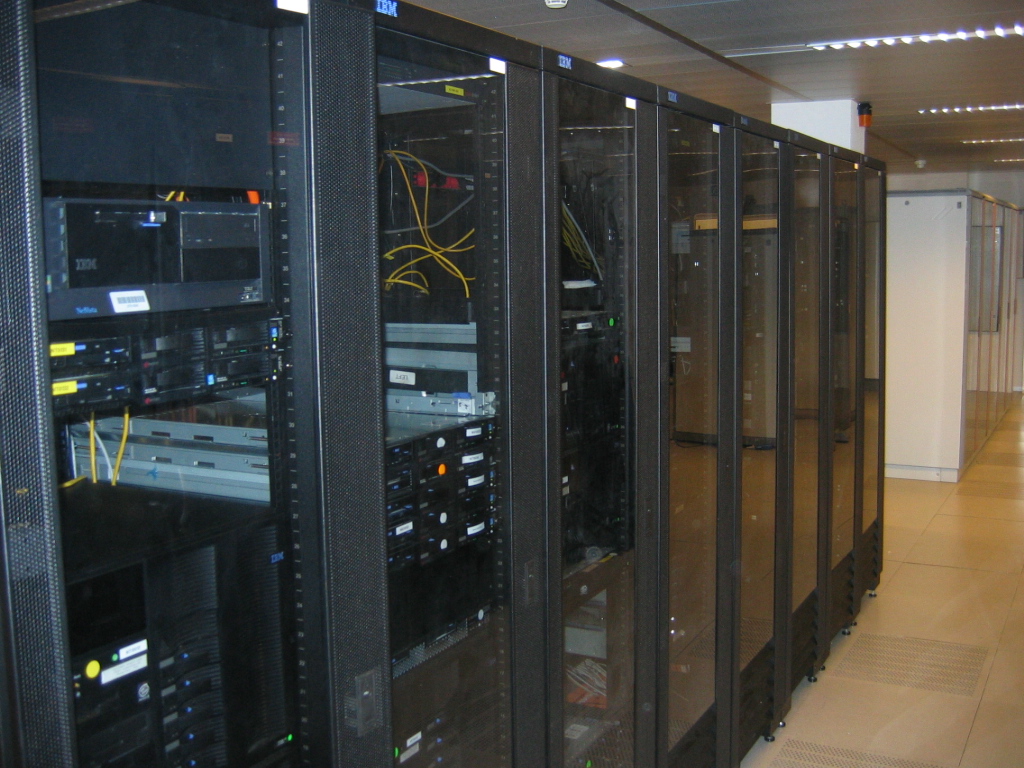
Third — and this is where the money would actually have to go — invest now in the foundations. Not just models, the letter stresses, but "people, skills, organisations, data, trust and adoption." Attractive career paths so expertise stays in Britain instead of emigrating to California. An AI skills and secondment route to complement the government's TechFirst programme. Continued backing for fundamental computing research, including low-power approaches. And data — "one of the UK's most important assets," the advisers write — with important national datasets identified and access arrangements tested in at least two high-value areas, naming health and creative data as candidates.
Fourth, the delicate bit: keep trusted access to the world's leading AI models while building selected domestic capability, so Britain doesn't depend on foreign systems for every use case. The pilots should trial different ways to build, train and access models — open-weight models, smaller domestic models — and the government should ring-fence some national AI computing capacity for the trials. The letter even nods toward the Alan Turing Institute's proposal for a public-interest sovereign base model: an open-source system built from scratch and released as a public good, governed in the UK, available to researchers, start-ups, small firms, public services and the open-source community — not a proprietary product for one company or department. The letter credits nine council members, including the Oxford computer scientist Sir Nigel Shadbolt, with developing the advice.
A definition of sovereignty worth arguing about
The letter's best line is its definition. AI sovereignty, the council writes, means having "sufficient agency across the AI value chain to deliver the UK's chosen outcomes, capture economic and public value for the UK, and maintain resilience under duress." Or in the shorter version that will travel: "The way for us to achieve AI sovereignty is to build trusted systems that deliver real public, economic and security benefits."
What's striking is what it doesn't say. This isn't autarky. Nobody is proposing Britain tries to out-spend the American labs — that race is already lost, and the letter is honest enough not to pretend otherwise. An analysis published by the Royce Institute at the University of Sheffield puts Britain's share of global GPU capacity at just 3–5%, against 60–70% held by the US and China combined. You can't out-compute that. But you can decide, deliberately, where the small slice you have goes — which is precisely what the sovereignty plan is for.
The timing is the real story
We pulled the full letter from gov.uk this morning — all four recommendations, the distribution list, the annex — and the detail that jumps out is the date. 30 July 2026. The co-chairs congratulate Narayan on his appointment; he took the newly created, cabinet-level AI minister job on 20 July in Andy Burnham's reshuffle. Then the letter sits. For eleven weeks. It surfaces, fully formed, on the morning of 19 October.
Nine days from now, Chancellor John Healey delivers his first Budget. The Institute for Fiscal Studies warned last week that he'll need to find £36 billion in tax rises or spending cuts just to offset the inflation hit to public services and a defence spending pledge. "It would be a choice to tolerate chunky cuts to the quantity or quality of some public services," IFS director Helen Miller told Reuters. AI sovereignty — the skills pipelines, the compute, the datasets, the pilots — costs real money, and the Treasury is about to tell the country there isn't any.
Narayan, for his part, has been talking a tougher game than his predecessors — and, it turns out, on the same theme as the CST. At Imperial College London on 12 October, a week before the letter surfaced, he told an audience at the university's Base One incubator: "We want the world's leading companies investing here, but we will not accept dependence as the price of that investment." In the same speech, published in full on gov.uk, he warned: "I will not accept a future in which Britain depends on technologies it cannot understand or control, while working people bear the costs of progress they had no power to shape" — and closed with his defining line: "We must build machines that serve us." Reaching for history, he recalled how James Callaghan's government backed the chipmaker Inmos with £50 million of public money in 1978, and how Britain's early lead in personal computing gave rise to Arm: "The bitter lesson of the past is that an early lead in technology is not the same as retaining the power to shape its future." Fine words. The CST's letter is, in effect, asking what those words cost — and who pays.
The government, Reuters reported, did not immediately respond to a request for comment.
A very British kind of week
None of this is happening in a vacuum. It's been quite the fortnight for British AI sovereignty, and the omens are mixed at best.
Microsoft just walked out of Nscale's UK data centre project at Loughton — the kind of vote of no confidence in British AI infrastructure that the CST letter reads like a direct answer to. Meanwhile the prime minister has been picking fights of his own: Burnham's non-compete pledge took aim at the talent-hoarding that keeps British AI expertise locked inside a handful of big labs — the same talent the CST says Britain must keep and grow at home.
There's an intellectual current running the same way, too. Nvidia's Jensen Huang used a London appearance to tell Britain to ditch opaque AI models — an argument that rhymes neatly with the CST's push for open-weight and publicly governed systems. And across the Channel, Europe's RAISE summit locked in pledges from DeepMind, Nvidia and Mistral, a reminder that every other serious economy is writing the same memo — and some are already writing the cheques.
The contrast with the CST's own co-chair is worth sitting with. Back in September 2023, when Britain rejoined the EU's Horizon science programme, Dame Angela McLean said: "International collaboration is a vital part of a thriving science ecosystem and association with the Horizon programme bolsters our plans to secure our status as a science and technology superpower." Superpower, then. High-value customer, now. That is the distance this letter is trying to measure.
AI sovereignty FAQ: what the CST letter actually asks for
What is AI sovereignty?
The CST definition: "sufficient agency across the AI value chain".
Who wrote the letter and when?
Dame Angela McLean and Lord Browne, co-chairs of the Council for Science and Technology; dated 30 July, published on gov.uk 19 October.
What are the four recommendations?
A UK AI Sovereignty Plan plus an ecosystem map; one accountable owner; investment in people, skills, data and computing; trusted access plus selected domestic capability including the Turing Institute public-interest base model.
Why does the timing matter?
Nine days before Chancellor John Healey's first Budget on 28 October; the IFS warning that he must find £36 billion in tax rises or spending cuts.
Our take
Here's our position, stated plainly: the diagnosis is brutal and correct, and the prescription is pure Whitehall. A sovereignty plan, a map, an accountable owner, some pilots — this is the language of a system that has confused organising itself with doing something. Britain didn't become an AI customer by accident; it got there through a decade of botched, stop-start industrial strategy, and no amount of ecosystem mapping will substitute for the one thing the letter is too polite to name: money. Compute is bought, talent is paid, datasets are built — and all of it is about to collide with a Budget carrying £36 billion of bad news.
There is one genuinely good idea in the letter, and it's the last one: a publicly governed British base model, open and available to researchers, start-ups and public services. That is sovereignty you can download. Everything else is process. If Narayan wants to prove the CST wrong, he should pick that fight in the next nine days — because after the Budget, the chequebook closes, and customer status becomes permanent.
Sources: Reuters (via LSE and ChannelNewsAsia), the Council for Science and Technology's letter on GOV.UK, Unite.AI's breakdown of the letter's annex, gov.uk's CST membership pages, the gov.uk transcript of Minister Narayan's 12 October Imperial College speech (also reported by HotMinute and Computer Weekly), and Reuters' 11 October reporting on the IFS Budget warning.


Comments
Post a Comment