
Vicor's Third Patent Case Aims at 20 AI Server Suppliers
Vicor's Third Patent Case Aims at 20 AI Server Suppliers
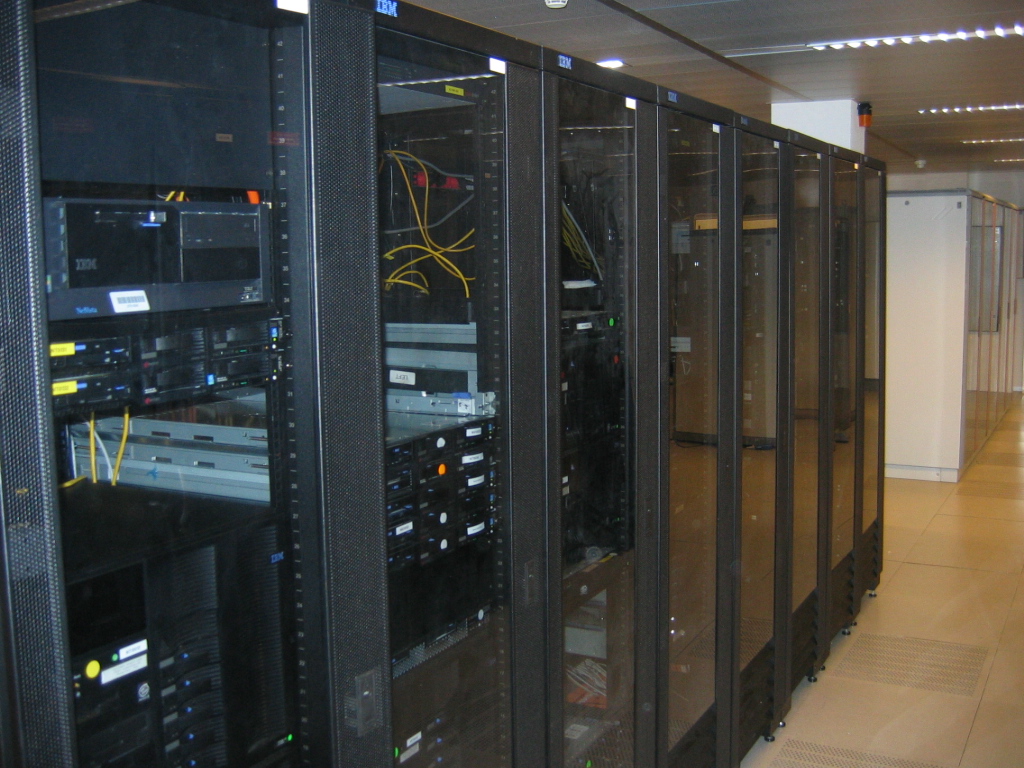
Photo: A data centre aisle. The new USITC investigation covers "certain vertical power delivery systems, components thereof, and computing systems containing the same." Credit: Wil Weterings, public domain, via Wikimedia Commons.
The legal war over AI infrastructure has moved somewhere almost nobody was watching: underneath the GPU. On October 9, 2026, the US International Trade Commission voted to open a fresh Section 337 investigation — 337-TA-1526 — into whether twenty companies, from Foxconn and Delta Electronics to Infineon and Luxshare, are infringing Vicor's patents on the power-delivery systems that feed AI servers. The prize Vicor is after is not money. It is an order barring the accused products — and any computing systems containing them — from entering the United States.
This is the third time in four years the Andover, Massachusetts power-module maker has hauled its rivals before the ITC. The first time, it walked away in February 2025 with an actual exclusion order. The second case is still grinding through the system. Companies do not file three trade cases in four years unless the tactic is working.
The choreography is worth noticing, too. Vicor's ITC complaint was filed on September 9 — one day after it filed, per reports from singulism and BigGo, parallel patent suits in Texas district court seeking damages. Import ban in Washington, money in Texas: a two-track squeeze on the companies that physically build America's AI boom. (Both outlets are secondary aggregators; no court docket was independently checked for this story.)
Twenty names, five jurisdictions
The official respondent list reads like a roll call of the global AI hardware supply chain. Three Delta Electronics entities from Taipei and Fremont, California. Four Quanta Computer entities from Taoyuan City and the United States. Five from the Hon Hai group — Hon Hai itself, Foxconn Industrial Internet, FII USA of Milwaukee, Wisconsin, and Ingrasys Technology with its US arm — which, as TaiwanPlus notes, makes twelve Taiwanese-linked respondents in all.
Then come the others: Luxshare Precision and its Dongguan subsidiary from China; Infineon Technologies of Munich, Germany — the only European name on the list; Monolithic Power Systems of Kirkland, Washington with its Shanghai subsidiaries; Flex Ltd. of Austin, Texas; and Celestica Inc. of Toronto, Canada. Five jurisdictions in all: Taiwan, China, Germany, the United States, and Canada. (CNA's own summary of the case omitted Canada; the official USITC list does not.)
We checked the USITC notice's respondent list ourselves. NVIDIA — whose chips sit at the centre of every AI server in this dispute — is not on it. Neither is any other chip designer. This is a case aimed at the people who build the machines and the power stages inside them, not the silicon at their core.

Photo: An electronics factory in Shenzhen, the contract-manufacturing heartland that Foxconn and Luxshare dominate. Credit: Steve Jurvetson, CC BY 2.0, via Wikimedia Commons.
Not damages — a door slammed shut
To understand why Vicor keeps coming back to the ITC, you have to understand the weapon. A limited exclusion order bars the covered products from being imported into the United States. A cease-and-desist order stops the sale of products already imported. There is no damages cheque at the end of a Section 337 case — which is exactly why Vicor reportedly filed the Texas suits the day before. Ban in one forum, money in the other.
The ITC's own announcement is careful to say what the October 9 vote did not do: "By instituting this investigation (337-TA-xxx), the USITC has not yet made any decision on the merits of the case." Institution is the starting gun, not the verdict. (USITC news releases are US government public-domain material.)
But once the ITC does decide, the remedy bites fast. Orders take effect on issuance and become final 60 days later unless the US Trade Representative disapproves them on policy grounds. During that presidential review window, respondents can keep importing only by posting a bond — and in Vicor's first case, that bond was set at 100 per cent of the system's value for computing systems. That is not a parking fine. It is a toll on doing business at all.
Third time's the pattern
Vicor's first case — 337-TA-1370, "Certain Power Converter Modules and Computing Systems Containing the Same" — was filed in 2023 and reached a final determination on February 13, 2025. The ITC confirmed Vicor's US Patent Nos. 9,516,761 and 9,166,481 valid and infringed, issued a limited exclusion order against all respondents, and slapped cease-and-desist orders on Delta Electronics (Americas), Quanta Computer USA, Quanta Computer, FII USA, and Ingrasys Technology USA.
The 1370 ruling had a wrinkle worth remembering: the final determination reversed an earlier finding and held that two Foxconn affiliates — FII USA and Ingrasys Technology USA — actually held a license to the '761 patent. Vicor said it would appeal. Losing a licensee while winning an exclusion order in the same ruling is the kind of mixed verdict only patent lawyers toast.
Case two — 337-TA-1484, "Certain Power Converters, Circuit Board Assemblies, and Computing Systems Containing the Same" — was instituted on February 17, 2026 and asserts US Patent No. 12,395,087. It is still pending; BigGo reports a target completion date of September 20, 2027.
The new case, per BigGo, asserts US Patent No. 10,903,734, titled "Delivering Power to Semiconductor Loads" — though a separate outlet cites a slightly different patent number, so treat the digits as unconfirmed until the official notice text is checked. The USITC must set a target date for completing the investigation within 45 days of institution, which lands around late November 2026. Section 337 cases typically run 16 to 18 months, putting a final determination somewhere between late 2027 and mid-2028.
Luxshare shrugs; Taipei watches
Luxshare chose to break its news late on a Saturday night — the Shenzhen market was dark, most of America was offline — and its exchange filing was calm to the point of dismissive: "The affected products — used in power modules and power supply solutions for data centres — have not entered mass production, so the investigation was unlikely to have a material adverse impact on business operations or near-term results." Translation: you cannot ban what we are not shipping yet. The company added that it had begun studying the patents, was organising technical, legal and business teams to prepare a response, and would keep working closely with clients and supply chain partners while protecting shareholder interests.
Delta Electronics was terser. Via CNA/Focus Taiwan: "It places great importance on intellectual property rights and compliance with laws in all jurisdictions, and will respond to the investigation through legal procedures to safeguard its rights and interests." It declined further comment, said the case is in legal proceedings, and said its products are not currently affected.
Taiwan's government is watching with professional calm. The Ministry of Economic Affairs, through its International Trade Administration, said the probe involves power delivery technology used in AI servers — and: "The government respects the legal process and will continue to monitor developments, maintain contact with the affected companies and provide assistance if necessary."
Taiwanese economist Darson Chiu called the short-term impact "truly very limited" — while cautioning that Taiwan's AI industry sends 70 to 80 per cent of its orders and exports to the US market and must stay vigilant on patent risk. That number is the real story: twelve of the twenty names are Taiwanese-linked, and the US is where they sell.
Why the fight moved under the GPU
Here is the technical bit in plain English. Vertical power delivery feeds electricity to a chip from directly beneath it, rather than across the circuit board. Shorter power paths mean less energy lost as heat and more of it doing useful work — and when a rack of AI accelerators is drinking megawatts, efficiency is money. The hardware feeding the processor has quietly become as strategically valuable as the processor itself. As the editorial at BitcoinVersus.Tech put it: "The legal fight over AI infrastructure has moved underneath the GPU. Power delivery is becoming valuable enough that the hardware feeding the processor can now carry patent, licensing and import risk of its own."
The part that should make supply-chain managers queasy is the downstream reach. The investigation covers "computing systems containing the same" — and a Customs ruling (HQ H348257) on the earlier exclusion order showed that downstream products of a named respondent can fall within an exclusion order even when built around upstream components from non-respondent third parties. NVIDIA and Quanta once asked Customs whether certain NVIDIA Blackwell products manufactured or imported by Quanta were caught by the earlier order. To be crystal clear: NVIDIA is not a respondent in the new case. But the precedent says the net, once cast, catches whole systems — not just power modules.
Power is becoming the great chokepoint of the AI buildout — financially as well as legally. For the debt side of the story, read our piece on AI's $113B debt machine and the wall it hit in September; for the energy side, why AI data centres may soon have to pay for the grid themselves. And on the Taiwan dimension of this case, see Nvidia's $668M bet on Taiwan's AI supply chain.
The TechPulse verdict
Here is our read. Vicor is a small Massachusetts power-module company playing a very sharp game: it does not need to outsell Foxconn or Infineon — it needs to own the toll road their power stages drive on. The 2025 exclusion order proved the tactic works; the 2026 case keeps the pressure on; and 1526 widens the net to twenty companies at once. The ITC is a brutal forum for respondents because the remedy is not money — it is the door. Even the credible threat of an exclusion order changes the licensing maths across an entire supply chain.
But this is still only an institution, not a verdict, and ITC patent cases are marathons: do not expect a final determination before late 2027. The most likely ending, as Darson Chiu's assessment hints, is settlement — licences, royalties, quiet deals. The power stage underneath your next AI server will be licensed one way or another. The only question is the price of the toll.
The accused are answering, and so far the answer is: not much is happening. Foxconn, Delta and Quanta have each told markets the investigation causes no material current disruption, while Foxconn Industrial Internet and Luxshare say the disputed products are still in validation or have not entered mass production (AsiaDaily, Oct 12). Foxconn has identified the patent at issue as US Patent 10,903,734 — the same vertical-power-delivery patent named in Vicor's Sept 9 complaint. Meanwhile Taiwan's government is now formally watching: the Ministry of Economic Affairs' International Trade Administration says it is monitoring the case, maintaining contact with the affected companies, and "respects the legal process" (Taipei Times, Oct 12). The clock is now the story — Section 337 cases typically take 12 to 16 months, the USITC will set a target completion date within 45 days, and any exclusion order takes effect immediately, becoming final after 60 days unless the US Trade Representative disapproves it. One reading gaining traction: this was never about one shipment. With the first case covering components, the second covering secondary power, and this one covering finished products and the supply chain, observers see Vicor building a comprehensive licensing network one filing at a time (Singulism). For context on the other trade weapon Washington reaches for, see our tariff scorecard.Update, Oct. 12: the respondents answer — and Taipei starts watching
— TechPulse USA newsroom
TechPulse USA is an independent technology news publication covering the people, companies and machines building the AI era. Every story is researched from multiple sources and every fact verified before publication.


Comments
Post a Comment