
US vs India 2026: Tariffs, H-1B Visas, Deportations Explained
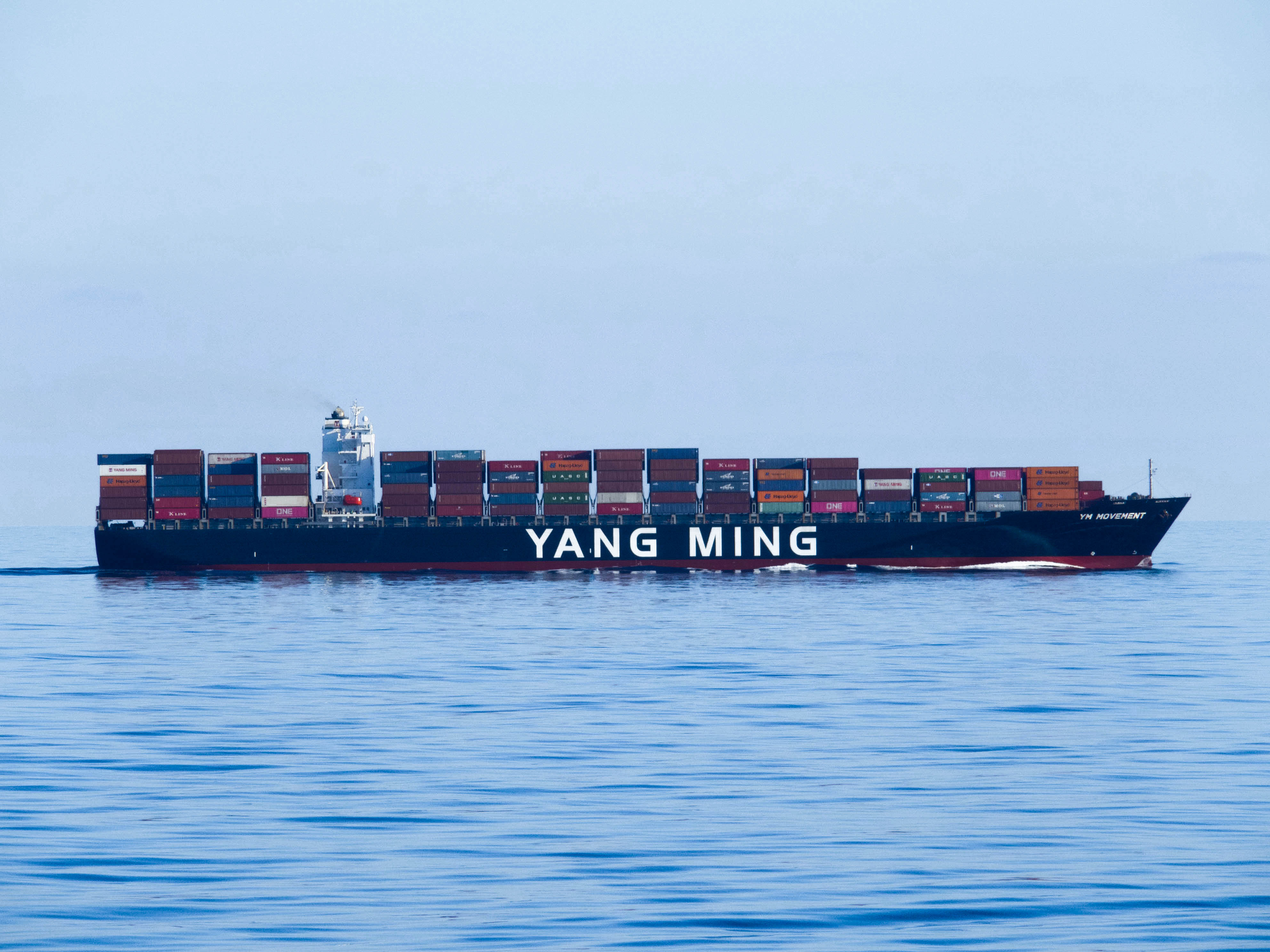
Oil and goods keep moving between India and the U.S. — but tariffs, visa rules and deportation flights now run through the same strained relationship. Credit: via Wikimedia Commons (CC BY-SA 4.0, photo by R hoevels).
Update, Sept. 27: The summitry the original piece was watching has happened. Trump and Xi met in Washington Sept 24 for a three-day summit — AI ended at 'continue discussions' with no formal agreement, and the tariff truce was extended to January 10. Treasury Secretary Scott Bessent's Sept 20 New York talks with China's He Lifeng produced a U.S. proposal for an AI safety notification mechanism. Neither development closed the India file: the 100% tariff authority still sits unsigned, and the trade deal Goyal is negotiating in Washington remains the next decision point.
The tariff headlines are the loudest part of the U.S.–India story this week — but not the whole story. A tariff war that just escalated to the edge of 100%, a trade deal "more or less finalised" but unsigned, a visa system being rewritten around Indian professionals, steady deportation flights, and Indian businesses taking real hits — here is everything the United States is doing on India right now, in one place.
Front 1: The tariff war — 50% today, 100% on Trump's desk
The immediate crisis: on September 16, the House passed the Lindsey O. Graham Sanctioning Russia and Iran Act of 2026 (262–159), which authorizes Trump to impose tariffs of up to 100% on the five largest buyers of Russian oil and gas — China, India, Azerbaijan, Hungary and Slovakia. The White House says Trump plans to sign it. Nothing is imposed yet: signing creates the authority, and a separate presidential decision would fire the weapon. India already sits at 50% U.S. tariffs (25% base plus 25% added in July–August 2025 over Russian oil), with exemptions for generic pharma, smartphones and some Section 232 goods. Loaded gun, not fired gun.
Front 2: The trade deal that is done but not signed
This is the strangest part of the standoff: both sides say the agreement is essentially finished. On September 9, Commerce Secretary Rajesh Agrawal said in Mumbai the India–U.S. trade pact is "more or less finalised, with only a few issues being discussed by the two sides," and "will be signed at an appropriate time." Commerce Minister Piyush Goyal has repeatedly said the same, adding that details will be announced once Washington offers India preferential terms versus its competitors.
The next milestone: Goyal is expected in the U.S. in late September, and New Delhi and Washington are working to fix a bilateral meeting where the BTA and the tariff mess get discussed together. A senior U.S. official said in July the deal "is there — we literally have the paper"; the remaining friction was Washington's own Section 301 trade investigations, including a forced-labour probe that layered an additional 10% duty on several countries, India included, from July 24.
The history here matters. In February the two sides announced an early understanding — tariff relief for India trimming Russian oil purchases and buying $500 billion of American goods — but talks stalled after the Supreme Court struck down Trump's tariff regime and Washington's attention was consumed by the Iran war. India never halted Russian purchases, only slowed them. The deal has been "almost done" for most of a year; the 100% tariff threat now gives both sides a reason to finally close it.
The trade underneath is moving Washington's way: in April–July of fiscal 2026–27, India's merchandise exports to the U.S. grew 3% to $34.5 billion, while imports from the U.S. jumped 22.42% to $22.12 billion — the imbalance narrowing, which is exactly what Washington says it wants.
Front 3: The visa squeeze on Indian professionals
If tariffs are the economic front, visas are the human one — and it is aimed squarely at India, because Indians dominate the H-1B system: about 71% of approved H-1B petitions in fiscal 2024 and 70% in fiscal 2025. Every rule change here lands hardest on them.
What Washington has done or proposed in recent weeks:
- Killing the 60-day grace period. On September 11, the Department of Homeland Security proposed scrapping the grace period that lets H-1B, L-1, O-1, E-1/E-2 and other employment-based visa holders stay up to 60 days after losing a job to find a new sponsor. Under the proposal, a laid-off worker would generally have to leave the country once the employment ends. It is a proposal, not law — it must go through public comment and a final rule.
- A $103,265 per-petition fee. Published in the Federal Register on August 24, this would charge employers that much for each new cap-subject H-1B petition. The comment window closes in late September; a final rule could come by year-end, and analysts expect court challenges.
- Vance backs the $100,000 fee. On September 16, Vice President JD Vance said: "The H-1B should not exist to replace American workers with low-wage foreigners. It should exist to enrich the American economy." His remarks are not a ban, but they signal where the administration is heading.
- The original $100,000 proclamation is on life support. Issued in September 2025, struck down by a federal judge in Boston in June 2026, appealed by the administration — and scheduled to expire this September unless extended.
- Rising wage floors and an OPT charge. The Labor Department has proposed raising the minimum wages employers must pay H-1B workers — a move analysts say could cost companies $18 billion in its first year — while an OPT charge is under consideration.
Add the backdrop: about one million Indians are stuck in the U.S. green-card backlog, per USCIS data — even as the administration courting India as a manufacturing alternative to China makes it harder for Indian engineers to work in America.
Front 4: Deportation flights keep running
The enforcement side is quieter but constant. The Ministry of External Affairs confirmed 1,076 Indian nationals have been deported from the U.S. in 2026, down from 3,567 in 2025 — a 2025 figure that was the highest in 16 years. New Delhi cooperates on verification — it takes deportees back once nationality is confirmed — but has protested treatment: after the shackling of women and children on a February deportation flight and the mistreatment of a 73-year-old deportee last year, External Affairs Minister S. Jaishankar told Parliament that women and children must not be restrained with handcuffs or chains. The official line from both capitals: curb illegal migration, protect legal mobility.
Front 5: Indian business takes the hit — textiles, pharma, and the rest
The textiles detail: the Tamil Nadu knitwear hub of Tiruppur sends about 30% of its roughly ₹45,000 crore in annual exports to the U.S.; industry leaders say about ₹6,000 crore of that business is at risk under current 50% duties, with some units already shut. The Global Trade Research Initiative estimates total U.S. duties on Indian textiles could reach 59–64% once add-ons are counted — against roughly 20% for Bangladesh and Vietnam. India exported over $10 billion in textiles and apparel to the U.S. in FY25 and is losing ground: January–June 2025 saw India at $5.36 billion against Vietnam's $8.54 billion.
Pharma is the other exposed flank. The U.S. accounts for $9.7 billion — nearly 38% — of India's $25.8 billion in pharmaceutical exports. Trump has said generic drugs stay tariff-free for two years from August 1, then face 100% tariffs for a year and 200% thereafter; a separate 100% tariff on branded drugs was slated from October 1. Four in ten U.S. prescriptions are supplied by Indian companies — so this front cuts both ways.
IT services, India's flagship export, are not tariffed as goods — but they are the industry most exposed to the H-1B vise above, which is where the real pressure on that sector sits.
India's counter-levers
New Delhi is not without cards. It has been expanding energy procurement from the U.S. for a decade — state-run GAIL holds a long-term deal for 5.8 million tonnes a year of U.S. LNG linked to Henry Hub prices, and Indian refiners are openly shopping for more American crude and LNG as a bargaining chip. Defense and technology ties (the iCET framework, U.S. arms sales) give Washington reasons to keep the relationship warm; the Quad keeps India inside America's Indo-Pacific architecture; and Modi met Putin in New Delhi last week ahead of a BRICS summit — a reminder that India has somewhere else to go.
The last confirmed Modi–Trump conversation predates the September 24 Trump–Xi summit. Goyal's late-September trip is the next scheduled contact — everything converges there.
What happens next: the tariff decision and Goyal's Washington trip
Three dates matter. Now: Trump's signature on the sanctions bill, and whether a signing statement hints at waiver or use. Late September: Goyal in Washington, the H-1B fee comment window closing, and the UNGA week where Zelenskyy, Netanyahu and Gulf leaders all lobby Trump in person. On September 20, Treasury Secretary Scott Bessent met China's On September 20, Treasury Secretary Scott Bessent met China's He Lifeng in New York with Iran sanctions and tariffs on the agenda; any U.S.–China understanding on Russian-energy enforcement directly shrinks India's room to maneuver. Our Iran-war coverage explains why the energy angle is about to get even tighter.
FAQ
What is the single biggest U.S. action on India right now?
The House-passed Russia/Iran sanctions bill authorizing 100% tariffs on Indian imports over Russian oil — headed to Trump's desk, which he reportedly plans to sign. But nothing is imposed yet; imposition needs a separate presidential decision.
Is the U.S.–India trade deal dead?
No — both governments say it is "more or less finalised" and will be signed "at an appropriate time." Friction remains over preferential tariff rates and Washington's Section 301 probes. Goyal's expected late-September U.S. visit is the next chance to close it.
How do the H-1B changes affect Indians specifically?
Indians hold about 70% of H-1B approvals, so every cost increase, wage floor, or grace-period removal hits them hardest. The 60-day grace-period repeal is only a proposal for now; the $103,265 petition fee's comment window closes in late September.
Why is India still buying Russian oil?
New Delhi's stated reason: energy security for 1.4 billion people through diversified sourcing at market prices. The unstated ones: discounted crude contained fuel inflation, Russia is India's largest defense supplier, and Washington itself granted temporary waivers on Russian shipments earlier this year when the Iran war disrupted supply.
Sources: The Hindu (Sept. 9, 17, 2026); DD India (Sept. 9, 2026); CNBC TV18 (Sept. 15, 2026); Reuters (July 22, 2026; March 13, 2026); MEA via New Indian Express (Aug. 4, 2026); Business Today (Sept. 11, 2026); Business Standard (Sept. 16, 2026); Hindustan Times (Aug. 2026); Financial Express (July 31, Aug. 2026); Moneycontrol (Sept. 2026); Gulf News (Sept. 17, 2026); GTRI/CITI data via Indian press.


Comments
Post a Comment