
Jabil Bets on India While Washington Threatens 100% Tariffs
What the Russian-diesel deal means for the tariff threat
Update, Oct. 13: the tariff paradox in our headline got sharper this week. On Oct 9 — days after the Lindsey O. Graham Sanctioning Russia and Iran Act of 2026 handed Washington authority for up to 100% tariffs on buyers of Russian energy — Trump announced a deal for Russia to ship 300,000+ tonnes of diesel to the US, with Treasury issuing a temporary general licence, citing diesel prices near $6.28 a gallon ahead of the midterms. New Delhi, already penalised for the same trade, now has an obvious card to play in pushing for the waiver the Act allows. Markets noticed: Adani Enterprises closed Tuesday at Rs 2,694 on BSE, up Rs 63 on the day.
Jabil–Adani deal FAQ: is the joint venture actually signed?
Did Jabil and Adani sign a joint venture? No — a non-binding MoU setting out a framework for a proposed 50:50 JV. Definitive agreements, regulatory approvals and customary conditions are all still pending.
What would the venture build? AI racks, servers, storage and networking equipment, plus PDUs, liquid-cooling systems and transformers; claimed "multi-gigawatt" rack capacity (no specific figure disclosed).
What did Jabil guide for fiscal 2027? $44.5B revenue and $17.55 adjusted EPS, both above LSEG consensus (reported Sept 30), citing AI data-centre demand.
How did markets react? Adani Enterprises closed at Rs 2,694 on BSE on Tuesday, up Rs 63 on the day (Economic Times).
Related reading: Trump's tariff scorecard — every major tariff so far; US vs India: tariffs, visas, deportations — the full picture; Nvidia's China share fell to 34% as Huawei surged to 28%.
A Florida factory company just signed a deal to build AI hardware in India — in the same fortnight Washington gave Donald Trump the power to hit Indian goods with 100% tariffs. If that sounds like a contradiction, welcome to the strangest industrial love story of 2026: American manufacturers can't stop betting on India, even as American trade policy tries to make India un-bettable-on.
Jabil Inc, the St. Petersburg-based electronics manufacturer you have probably never heard of despite it building gear for Apple, and Adani Enterprises Ltd, the flagship of Gautam Adani's sprawling empire, announced on Tuesday that they had signed a memorandum of understanding to explore a 50:50 joint venture manufacturing AI racks, servers, storage and networking equipment in India. The announcement went out on a joint press release datelined "New Delhi, India & St. Petersburg, Fla." — two cities on opposite sides of a trade war shaking hands over a server rack.
And to be clear about what this is: a handshake. Not a factory, not a cheque, not a done deal. The MoU is explicitly non-binding, and the release says the proposed venture "remains subject to execution of definitive agreements, receipt of applicable approvals and satisfaction of customary conditions." Several relays described the deal as a JV being "signed" — that is shoddy shorthand. Nothing has been signed except an agreement to keep talking. Which makes the timing even more interesting.
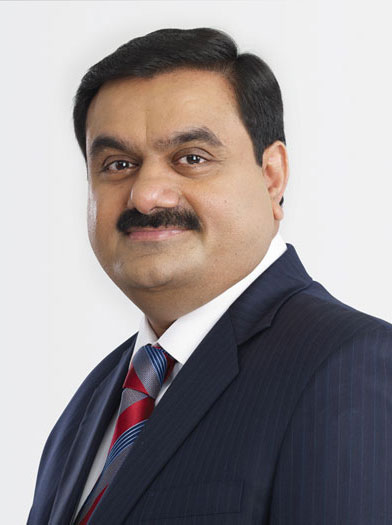
Photo: Gautam Adani, chairman of the Adani Group. He signed the memorandum of understanding with Jabil CEO Mike Dastoor in person on Tuesday. (Wikimedia Commons, CC BY 3.0)
A handshake, not a joint venture (yet)
Start with the paper itself, because the paper is thinner than the headlines. Adani Enterprises and Jabil (NYSE: JBL) have agreed on a framework for a proposed equal-split venture. No investment figure was disclosed. No manufacturing location in India was named. No timeline for definitive agreements or first production was offered. We checked the Business Wire release text against Reuters' version of the story and the Evertiq relay: the product list, the 50:50 split and the "multi-gigawatt" phrasing match word for word — and so does what none of them say, which is a number.
That doesn't make it meaningless. Corporate India announces a lot of memoranda that die in a filing cabinet, but this one formalizes something real: the two companies announced an alliance "in June," according to the companies, and the October MoU is the next mechanical step — definitive agreements, regulatory approvals, then money. Gautam Adani put his name on it personally. Mike Dastoor, Jabil's CEO, was in the room for the signing; an ANI photograph captured the two of them at the table, the kind of staged ceremony companies only bother with when they mean the photo to travel. It travelled.
Adani, in the joint statement, went full industrial-visionary: "The AI revolution will demand far more than just breakthroughs in algorithms. It will require an entire new industrial architecture where energy, hyperscale infrastructure, advanced computing and precision manufacturing converge to power the intelligence economy." He added that Adani's vision is "to expand up the AI value chain evolving from powering and hosting AI infrastructure to engineering and manufacturing the critical systems that will define the next generation of computing" — a sentence that tells you exactly where Adani thinks the money is moving.
Dastoor was more operational: "The signing of this MoU is the next step forward in our shared efforts to establish a scaled AI infrastructure manufacturing platform in India, a market we believe will become increasingly important for both domestic and global AI infrastructure demand." He added that combining "Jabil's 60 years of engineering and manufacturing expertise with Adani's significant infrastructure and energy capabilities" would let the company "bring our rack-level data centre solutions to more hyperscalers in India and around the world."
What they'd actually build
The product list reads like the bill of materials for the AI boom. According to the release, the venture would manufacture and assemble AI racks and servers, storage and networking equipment for data centres, plus power distribution units, liquid-cooling systems and transformers — along with installation and commissioning services. The racks are meant to house high-performance computing systems for AI applications, and the companies claim the platform would deliver "multi-gigawatt AI rack manufacturing capacity" supporting computing systems with "a combined power capacity of several gigawatts."
Notice what's missing: which of those gigawatts. Two? Five? The companies didn't say, and we are not going to invent a figure. They also put their own giant number on the opportunity — a "global market opportunity for AI computing infrastructure at more than $3 trillion over the next seven years." That is the companies' own estimate, relayed faithfully and sceptically: $3 trillion is a lovely round number, and it came from the press release, not from a forecaster with a spreadsheet.
The liquid-cooling detail matters more than it looks. Jabil has been quietly buying its way into critical power management and liquid-cooling technology — the acquisitions went unnamed in the coverage — because the AI rack of 2026 is not a box of servers, it is a power and plumbing problem. Liquid cooling is the difference between a rack that melts and a rack that trains a model. That Jabil brings this to the table, rather than just sheet metal, is the whole point of the partnership from Adani's side.

Photo: Rows of server racks inside the CERN Computer Centre (file photo for illustration — the venture would manufacture AI racks, servers, cooling and power systems). Credit: SimonWaldherr, Wikimedia Commons, CC BY-SA 4.0
The 100% tariff paradox
Here is the part that makes this story bigger than two companies. The MoU landed in the middle of the worst US-India trade fight in years. An interim trade framework in February cut US tariffs on Indian goods from 50% to 18% — progress — and then, after the Supreme Court struck down Donald Trump's IEEPA tariffs in February, a temporary 10% baseline applied. But in September, Trump signed a law allowing tariffs of up to 100% on countries buying Russian oil. India buys roughly half its crude from Russia. The talks have now, in Finance Minister Nirmala Sitharaman's word, "plateaued" — and she accused the US of "weaponising" tariffs. The USTR, Jamieson Greer, said this month a deal is not imminent.
So a Florida manufacturer is laying the groundwork to build AI infrastructure in India while the US Congress hands the president a legal mechanism to slap 100% tariffs on Indian goods. Industry is voting with its factories; Washington is voting with its tariffs. One of those votes is about where the next decade of computing gets built, and it is not the one on Capitol Hill. Companies do not sign multi-year manufacturing frameworks — even non-binding ones — for countries they expect to be tariffed out of the market. They sign them for countries they expect to supply the world from.
There is a defensive read, too, and it is worth stating plainly: building in India hedges Jabil against the very tariff chaos that threatens Indian exports. If the product is made in India for Indian and Asian hyperscalers, US tariffs are someone else's problem. If trade normalises, the same factories can feed global demand. Either way, the factory wins. That is not cynicism; that is what supply-chain people get paid to do.
Adani's climb up the AI value chain
For Adani, this is the next rung on a ladder the group has been climbing at speed. AdaniConneX — Adani Enterprises' 50:50 data-centre venture with US operator EdgeConneX, formed in 2021 — already runs campuses in Chennai and Noida and has drawn hyperscalers at scale. In February, Adani announced a plan to pour $100 billion by 2035 into renewable-energy-powered, AI-ready data centres, expanding AdaniConneX from 2 GW toward 5 GW, and claimed it could catalyse $150 billion more for a $250 billion AI ecosystem. Google is building a gigawatt-scale campus in Visakhapatnam; Microsoft has Hyderabad and Pune on the map.
The demand is not hypothetical. Just last week, CoreWeave entered India with 240 MW — expandable to 480 MW — at AdaniConneX's Taloja campus near Mumbai, with NVIDIA Vera Rubin systems and a first phase due in mid-2028. The colocation market is running at 97% occupancy on about 1.7 GW today, and Jefferies projects India's data-centre capacity will grow fivefold to 8 GW by 2030 on $30 billion of capex; Bernstein sees India at the "higher end of 5–8 GW by 2030." The Union Budget this year even gave data centres a tax holiday until 2047. Adani's move is simple to describe: stop just powering and hosting AI infrastructure, start building the machines that go inside it. As he put it, "combining Jabil's world-class engineering and manufacturing capabilities with Adani's integrated strengths in energy, infrastructure and data centres to help build the physical backbone of the global AI economy."
The bet only looks obvious if you assume the hardware demand materialises. Everyone is assuming it. Europe is scrambling for its own AI hardware capacity — Scaleway just picked AMD for Sweden in the race against NVIDIA's grip on the market — and the buildout is straining everything from power grids to the security of the data centres themselves, which Anthropic warns are months away from AI worm attacks. India wants to be the place that builds the racks, not just the place that racks them. This MoU is Adani's bid for that seat.
Why Jabil needs this as much as India does
Jabil is having a very 2026 sort of year. On September 30 the company forecast fiscal 2027 revenue of $44.5 billion and adjusted earnings of $17.55 a share — both above the LSEG consensus — citing AI data-centre demand alongside automotive, healthcare, energy infrastructure, defence and aerospace, and warehouse automation. The fourth quarter beat too: adjusted EPS of $4.40 against $4.07 expected, revenue of $10.62 billion, up 28.6% year-on-year. The shares still fell about 2% in premarket trading, because nothing is ever good enough. That is the stock market's business; the operating business is a contract manufacturer founded in Detroit in 1966, now headquartered in St. Petersburg, Florida, with roughly 138,000 employees across more than 100 sites in about 30 countries, an S&P 500 constituent, and one of the quietest important companies in American manufacturing.
Jabil's problem is a good problem: AI infrastructure demand is outrunning the capacity of any single geography. A scaled manufacturing platform in India gives it a second front — close to Asia's hyperscalers, outside the China supply chain, and inside a government that just handed data centres a two-decade tax holiday. Hardware economics are under the microscope everywhere right now, and rack-scale AI gear is where the margins live. Jabil is not doing Adani a favour. It is buying a seat at the table where India's 8-GW buildout gets supplied.
What has to go right before a single rack ships
Now the sceptic's paragraph, which this story earns. A non-binding MoU with no investment figure, no location, no timeline and no approvals is, until proven otherwise, a press release with signatures. Definitive agreements still have to be negotiated. Regulators still have to approve. The US export-control regime for AI hardware — which Washington keeps tightening — could still complicate what an American company is allowed to build where. India's tax-holiday mechanics still have to work in practice, not just in a Budget speech. And the $3 trillion figure is, to repeat, the companies' own. Press releases are not due diligence.
But dismissing it as paper would be the lazier mistake. The companies named their products, named their split, named their dateline and put both chief executives in the same room for a photograph. CoreWeave's 240 MW deal landed last week with a 2028 delivery date — real hardware, real schedule, real customer. The Indian colocation market is 97% full. None of that is a memorandum. What the MoU actually is, stripped of ceremony: two very large companies telling the market, the regulators and each other that they intend to build AI factories in India, and daring anyone to bet against it. In a trade environment this hostile, that is not nothing. It is, in fact, the whole story: the factories are being planned in India anyway, 100% tariffs or not. Washington should read that as data.
Sources
Reuters (announcement and India-US trade reporting), the joint Adani Enterprises–Jabil press release via Business Wire, Evertiq, New Indian Express, Economic Times Infra, NDTV Profit, Times of India, Tribune India, Enerdata, and the companies' own investor materials. The $3 trillion market figure and the June alliance reference are the companies' own claims, reported as such.
TechPulse USA covers the global AI and technology industry for a US audience — the deals, the hardware and the policy fights shaping who builds the future. We verify every claim against primary sources and name our sources.


Comments
Post a Comment